



Best Sewing Machine for Alterations and Daily Repairs at Home

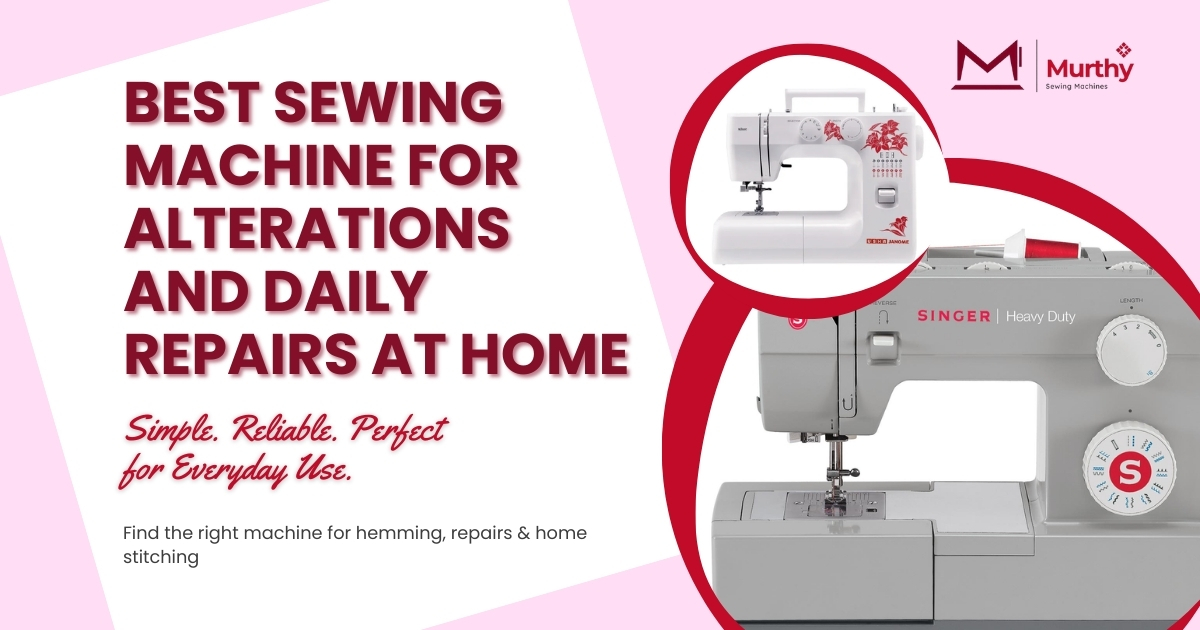
Not every home needs a feature-heavy sewing machine. For most households, the real requirement is simple: a sewing machine that can handle alterations and daily repairs smoothly, without being complicated or tiring to use. From hemming pants and fixing loose seams to small garment adjustments and everyday stitching, the right machine makes these tasks quicker and more reliable.
This guide is written specifically for home users who want a sewing machine for regular alterations, minor repairs, and routine stitching, not for heavy tailoring or industrial work. By the end, you’ll clearly know what type of machine suits your needs and how to choose one that feels right for daily home use.
What Counts as Alterations and Daily Repairs at Home?
Alterations and daily repairs usually include:
- Shortening or lengthening clothes
- Fixing loose seams and torn stitches
- Adjusting blouse and dress fittings
- Repairing school uniforms
- Attaching buttons and hooks
- Simple patchwork and reinforcement stitching
These tasks don’t require dozens of stitch patterns. What matters more is stitch consistency, ease of control, and comfort during use.
What to Look for in a Sewing Machine for Alterations
When the main purpose is home alterations and daily repairs, these features matter most:
1. Ease of Use
A machine should be simple to operate, especially if it’s used frequently for short jobs. Complicated controls slow you down and reduce confidence.
2. Stitch Stability
Straight stitches must look neat and consistent. Alteration work often involves visible seams, so clean stitching is important.
3. Comfortable Speed Control
Daily repairs are easier when you can stitch slowly and accurately, especially around curves, edges, and corners.
4. Fabric Compatibility
The machine should handle common home fabrics like cotton, blends, uniforms, light denim, and synthetic materials without struggle.
Straight Stitch or Zig-Zag: Which Is Better for Alterations?
For alterations and repairs, straight stitch machines are often more than sufficient. They are stable, easy to control, and ideal for everyday seams and fixes.
However, zig-zag machines offer added flexibility. Zig-zag stitching is useful for edge finishing, small reinforcements, and working with slightly stretchy fabrics.
Simple rule:
- Mostly repairs and adjustments → Straight stitch machine
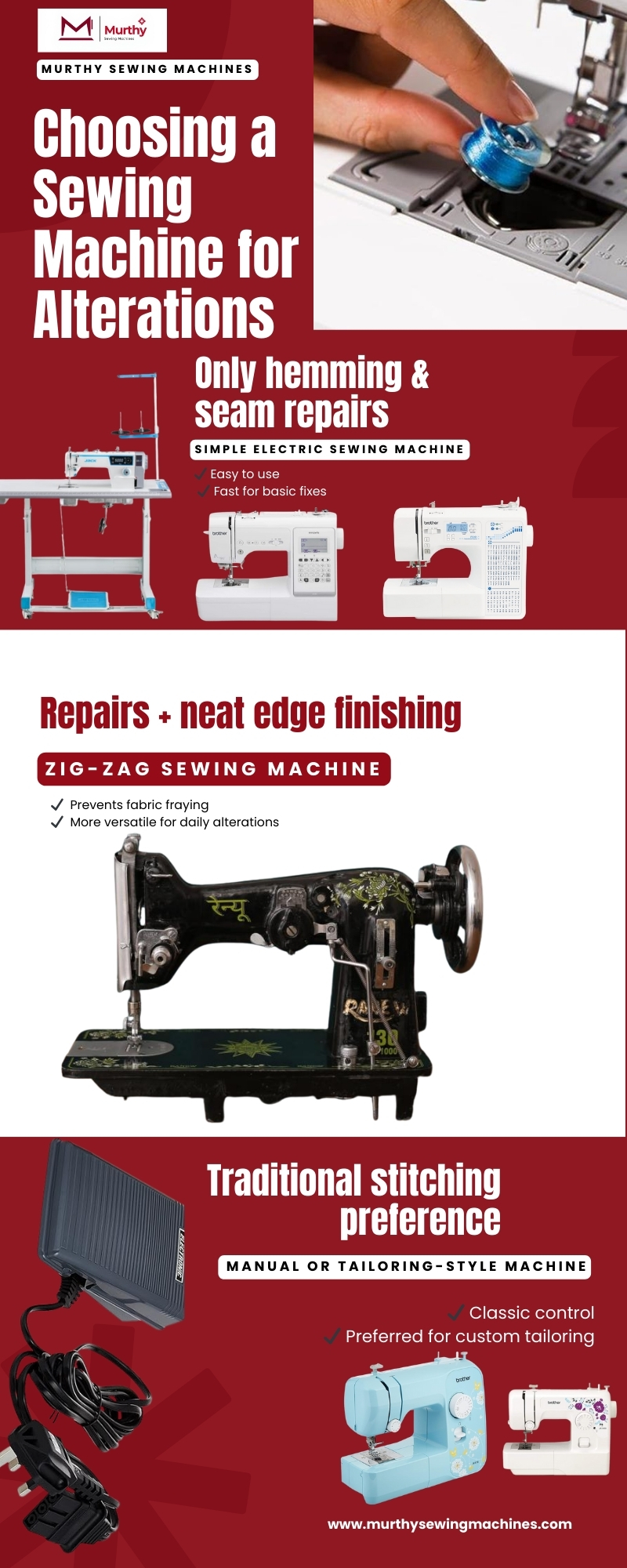
- Repairs + neat edge finishing → Zig-zag sewing machine
Types of Sewing Machines Suitable for Daily Repairs
Electric Sewing Machines
Electric sewing machines are the most popular choice for home alterations. They reduce physical effort and offer better speed control, which helps with precision work.
Manual or Foot-Operated Machines
These suit users who prefer traditional stitching or live in areas with frequent power cuts. They are reliable but require more physical effort.
For most modern homes, electric sewing machines are the easiest and most comfortable option for daily use.
Best Sewing Machine Choices for Alterations and Repairs
Simple Electric Sewing Machines
These are ideal for users who mainly do straight stitching, hemming, and repairs. They are easy to learn and quick to use for short tasks.
Zig-Zag Sewing Machines
If your alteration work includes edge finishing or working on different fabric types, zig-zag machines give you extra flexibility without making things complex.
Traditional Tailoring-Style Machines
These suit users who prefer a classic sewing feel and mainly work with straight seams and structured fabrics.
Common Mistakes Home Users Make When Buying for Repairs
Many buyers assume that more stitch options automatically mean better results. In reality, for daily repairs:
- Extra stitches often go unused
- Simpler machines are faster for routine tasks
- Comfort and control matter more than features
Another mistake is choosing a machine that feels heavy or awkward to operate for short jobs. Alteration work benefits from a machine that feels light, responsive, and easy to handle.
How to Choose the Right Machine for Your Home
Ask yourself these questions:
- Will I use this machine often or occasionally?
- Do I mostly stitch straight seams or also finish edges?
- Am I comfortable with basic controls or do I want more flexibility?
If your answers lean toward simple, frequent use, choose a straightforward electric machine. If you want more versatility without complexity, a zig-zag model is a better fit.
FAQs
Which sewing machine is best for alterations at home?
A simple electric sewing machine is best for home alterations because it is easy to control and handles straight stitching neatly.
Do I need a zig-zag sewing machine for daily repairs?
Zig-zag stitching is helpful for edge finishing, but it is not mandatory if your work is mostly straight seams and basic repairs.
Is an electric sewing machine better than a manual one for repairs?
Electric machines are generally more comfortable and quicker for daily repairs, while manual machines suit users who prefer traditional stitching.
Can budget sewing machines handle daily alteration work?
Yes, many budget sewing machines are designed specifically for home alterations and regular repairs when used properly.
What fabric types can home sewing machines handle for repairs?
Most home sewing machines handle common fabrics like cotton, blends, uniforms, and light denim used in daily stitching.
How important is speed control for alteration work?
Speed control is very important because alterations often require slow, precise stitching around seams and edges.
Conclusion
The best sewing machine for alterations and daily repairs at home is not the most advanced one, but the one that feels easy, stable, and comfortable to use regularly. Whether you choose a simple electric model or a zig-zag machine, focusing on stitch quality and ease of control will give you better results than chasing features.
When your sewing machine fits your daily needs, even small repairs become quicker, neater, and more satisfying.
3 thoughts on “Best Sewing Machine for Alterations and Daily Repairs at Home”