



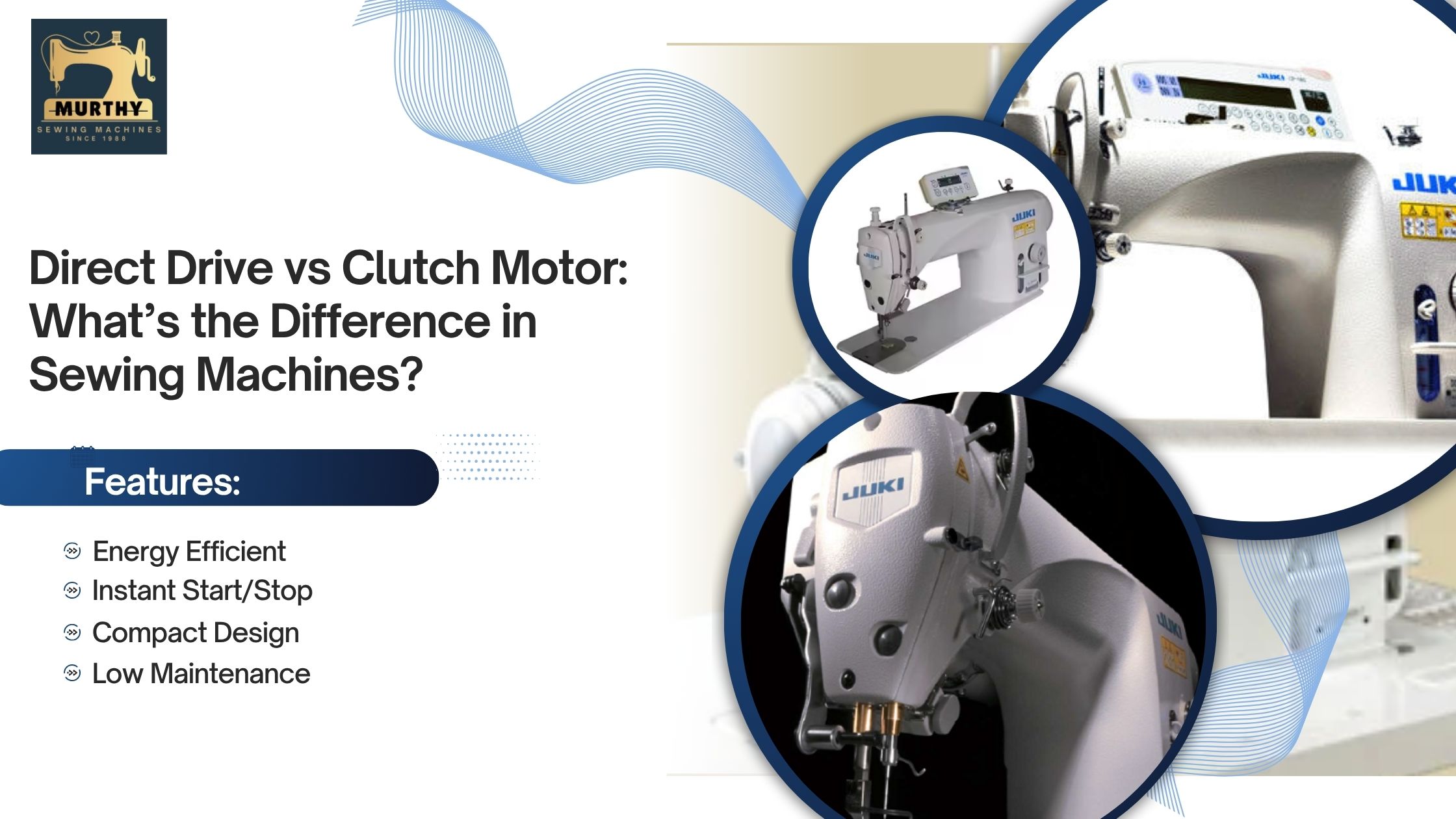
Direct Drive vs Clutch Motor: What’s the Difference in Sewing Machines?

Choosing the right sewing machine goes beyond just the design and features—it’s also about the motor that powers it. For boutique owners, tailoring units, and industrial garment manufacturers, understanding the difference between a Direct Drive Motor and a Clutch Motor is essential to making the right investment.
This guide breaks down the differences between these two motor types to help you decide which is best suited for your sewing operations.
What is a Clutch Motor?
A Clutch Motor is the traditional motor system commonly used in industrial sewing machines. It is typically mounted beneath the table and connected to the machine via a belt. Once powered on, the motor runs continuously, regardless of whether the machine is in use. The sewing function is engaged through a foot pedal that activates the clutch mechanism.
Key Characteristics:
- Constant rotation
- High-speed stitching performance
- More power, but less control
- Often noisier and consumes more electricity
- Suitable for bulk, non-stop production
What is a Direct Drive Motor?
A Direct Drive Motor is a modern innovation in sewing machines. It is built directly into the machine’s head, eliminating the need for a belt. These motors operate only when the foot pedal is pressed, making them more energy-efficient and user-friendly. They also provide precision and speed control ideal for detailed and customized work.
Key Characteristics:
- Energy-efficient (consumes power only when sewing)
- Quieter operation
- Greater control at variable speeds
- Compact design with fewer moving parts
- Ideal for tailors, designers, and boutiques
Direct Drive vs Clutch Motor – Feature Comparison
| Feature | Direct Drive Motor | Clutch Motor |
| Energy Usage | Low – operates only when needed | High – runs continuously |
| Noise Level | Quiet and smooth | Loud and constant |
| Speed Control | Precise and adjustable | Less control, full speed only |
| Vibration | Minimal | High due to belts |
| Installation | Compact and integrated | Requires extra space for motor |
| Maintenance | Minimal upkeep needed | Regular belt checks and adjustments |
| Sewing Precision | High – great for intricate work | Standard – good for straight jobs |
| Best For | Boutiques, tailoring, detailed work | Factories, high-volume production |
Which One Should You Choose?
Choose Direct Drive if:
- You run a boutique or tailoring shop
- You focus on fine detailing and customization
- You need a quiet and energy-efficient machine
- You have limited workspace
- You prioritize ease of use and low maintenance
Choose Clutch Motor if:
- You handle bulk orders or high-speed production
- You don’t mind higher noise levels
- You need a lower initial investment
- Your operation can handle regular maintenance
- You require raw power for continuous operation
Real-World Examples
Many tailors and boutique owners in India have upgraded to Direct Drive Machines such as the Jack F4 or Jack A2C models. These machines are known for their quiet operation, energy savings, and ease of control—ideal for working in compact spaces and serving customers who expect quick turnaround with precision.
Meanwhile, Clutch Motor Machines are still widely used in large-scale garment factories and stitching units where speed and quantity take precedence over detail and comfort. These are commonly used for denim manufacturing, bag stitching, and uniforms where continuous operation is needed.
Pros and Cons Summary
Direct Drive Motor
Pros:
- Energy saving
- Quieter and smoother
- Greater control
- Less maintenance
- Longer motor lifespan
Cons:
- Higher upfront cost
- May require specific spare parts
Clutch Motor
Pros:
- High torque and consistent speed
- Cheaper initially
- Proven technology for heavy use
Cons:
- Loud and vibrates more
- Uses more power
- Needs frequent servicing
Final Thoughts
When it comes to choosing between direct drive and clutch motor sewing machines, the decision should align with your business model. For most tailoring shops, boutiques, and home-based designers in India, direct drive sewing machines offer far superior benefits—better control, less noise, and energy savings. However, if your focus is on industrial-scale output with continuous operation, clutch motor machines remain a dependable option.
Invest wisely based on your production needs, space availability, and budget. The right machine motor can make a massive difference in productivity, quality, and comfort—especially in a competitive tailoring industry.
Frequently Asked Questions (FAQs)
Q1: Which motor is more suitable for a home tailoring business?
A direct drive motor is perfect for home tailoring. It’s quieter, easier to manage, and saves electricity—making it ideal for home use.
Q2: Do clutch motors consume more electricity?
Yes. Clutch motors run continuously, which leads to higher power bills compared to direct drive motors that run only when needed.
Q3: Can I use a clutch motor for boutique-level work?
You can, but the noise, vibration, and limited speed control may hinder performance. Direct drive is more aligned with boutique-level expectations.
Q4: Are direct drive sewing machines easier to maintain?
Absolutely. With fewer mechanical components and no belts, direct drive machines need less maintenance and experience fewer breakdowns.
Q5: Why do factories still use clutch motors?
They are cost-effective and capable of handling continuous, repetitive sewing work in high volumes—ideal for mass production lines.