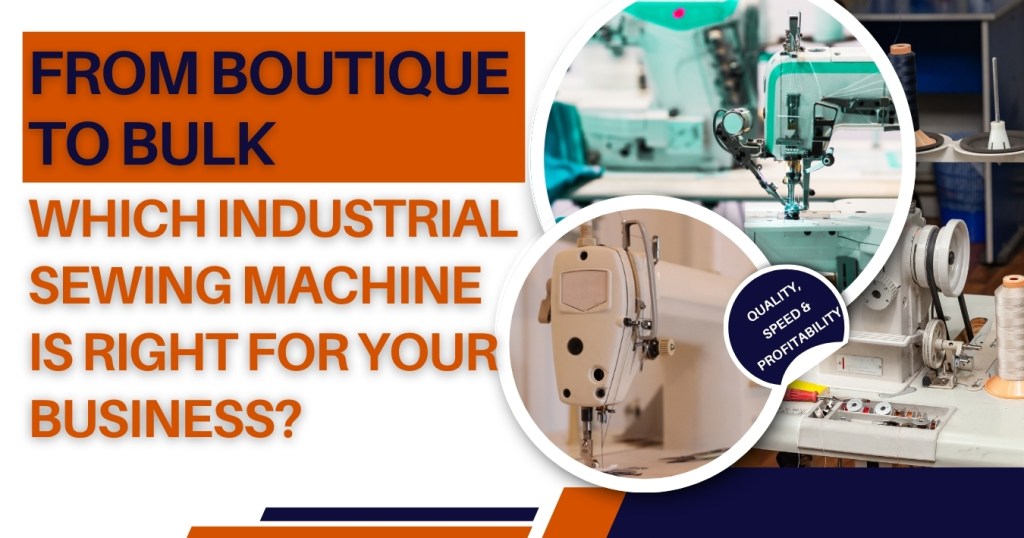



How to Upgrade from a Domestic to an Industrial Sewing Machine


Moving from a home-based setup to a professional tailoring environment is a major milestone. Upgrading from a domestic sewing machine to an industrial model boosts productivity, quality, and capacity. This guide explains how to shift to industrial-grade tools in a structured, cost-effective, and scalable way.
1. Recognize When It’s Time to Upgrade
Think of these signs as green lights for growth:
- You’re handling multiple orders daily: finishing with a home machine slows you down.
- Heavier fabrics like denim, canvas, and upholstery are involved.
- You need higher stitch speeds or more consistent stitching quality.
- Your existing machine struggles with features like auto thread trim or knee lift.
- Once these challenges pile up, it’s time to explore industrial models.
2. Understand the Differences
| Feature | Domestic Machine | Industrial Machine |
|---|---|---|
| Motor | Small with limited torque | Heavy-duty direct-drive or clutch motor |
| Speed | Up to 1,200 stitches per minute | Between 3,000 – 6,000+ stitches per minute |
| Build Quality | Plastic/Internal parts | Full-metal, commercial-grade durability |
| Power Consumption | Low–moderate | Higher (but efficient for output) |
| Size & Weight | Compact and lightweight | Larger, heavier, more stable |
| Maintenance | Basic cleaning and oiling | Requires regular servicing and lubrication |
| Special Features | Optional auto-trim, few stitch options | Commonly includes auto-trim, knee lift, reverse feed |
3. Set a Budget and Outline Your Needs
Transitioning smoothly into industrial work starts with financial planning and defined needs:
- How many garments do you stitch daily or weekly?
- Are you working with thick or multi-layered fabrics?
- Do you place value on speed, automation, or quiet operation?
- Explore pricing ranges for industrial machines (₹35,000 to ₹6 lakh+)
Build a budget that reflects machine type, added features, and future servicing.
4. Choose the Right Industrial Machine Type
Identify which machine aligns with your production requirements:
Direct-Drive Industrial Models
- Compact yet powerful models perfect for light boost in production
- Ideal for workshops upgrading to 200–500 garments per week
- Examples: servo-driven machines with auto trim
Clutch Motor Heavy-Duty Models
- Built for thick fabrics and bulk output in factory environments
- Fit for upholstery, denim, uniform making, or bag manufacturing
Multi-Needle Embroidery Machines
- Best for studios that offer custom stitching and logos
- Support 6 to 10 needles, fast multi-color designs
5. Assess Workspace and Infrastructure Needs
Industrial machines require proper setup and conditions:
- Power Supply: 220–240V single phase, proper grounding, consider UPS for sensitive models
- Space: Steady table with room for motor housing and movement
- Stability: Non-slippery and level floor, vibration-damping supports
- Lighting & Ventilation: Well-lit and ventilated environment to prevent fatigue
Plan these requirements before making the purchase to avoid delays in implementation.
6. Learn the New Equipment
Industrial machines are professional-grade tools that require a learning curve:
- Operator Training: Understand threading, bobbin systems, motor controls
- Hands-On Practice: Focus on features like speed control, knee lift, needle positioning
- Routine Maintenance: Familiarize yourself with lubrication schedules and troubleshooting
Being confident with your machine means maximum output and client satisfaction.
7. Plan the Financial Investment
Upgrade in stages, if needed:
- Purchase in phases-start with a lockstitch industrial servo, then add embroidery or clutch models
- Consider financing, leasing, or installment plans to manage cash flow
- Factor in maintenance costs, spare parts, motor accessories, and servicing
- Strong financial planning ensures business stability during expansion.
8. Integrate Quality and Consistency Standards
Industrial machines demand higher benchmarks
- Monitor stitch consistency and tension across batches
- Keep maintenance logs and printing reports on machine performance
- Implement quality control checks after every production run
This builds professionalism and reliability in delivery.
9. Market Your New Capabilities
Tell your clients about your upgraded production:
- Describe faster turnaround time and heavier fabric compatibility
- Highlight professional features like automatic trimming and heavy-duty resilience
- Introduce new services such as logo embroidery or custom upholstery
Fresh capabilities bring in new clients and larger orders.
10. Plan for Ongoing Growth
With industrial success comes opportunities to scale:
- Add finishing machines (overlock, coverstitch) for professional hems
- Expand floor space and hire skilled operators
- Explore bulk discount and repeat-order contracts with institutions or boutiques
Scaling smartly makes operations sustainable and profitable.
FAQs (Frequently Asked Questions)
Can I use domestic machine attachments on industrial machinery?
No—industrial machines use specialized tools and feet not compatible with domestic accessories.
Do industrial machines use more electricity?
They consume more power, but deliver far higher output. Using them efficiently balances energy costs per stitch.
Is an industrial machine noisy?
Some are louder, especially clutch systems. Direct-drive industrial models are much quieter and suitable for home workshops.
Is servicing frequent?
Yes—lubrication and belt adjustments are necessary. Establish a routine schedule for smooth operations.
Are industrial machines hard to learn?
There is a learning curve, but most providers include orientation and your proficiency will improve quickly with use.
Final Thoughts
Shifting from domestic to industrial sewing is a smart, long-term investment for any serious tailor, boutique, or production unit. It brings efficiency, strength, and professionalism to your work. With careful machine selection, structured investment, and maintenance planning, you pave the way for scalable tailoring success.
Delay no more-it’s time to grow beyond one machine and embrace industry-grade efficiency.