



Industrial vs. Domestic Sewing Machines: Which One is Right for You?

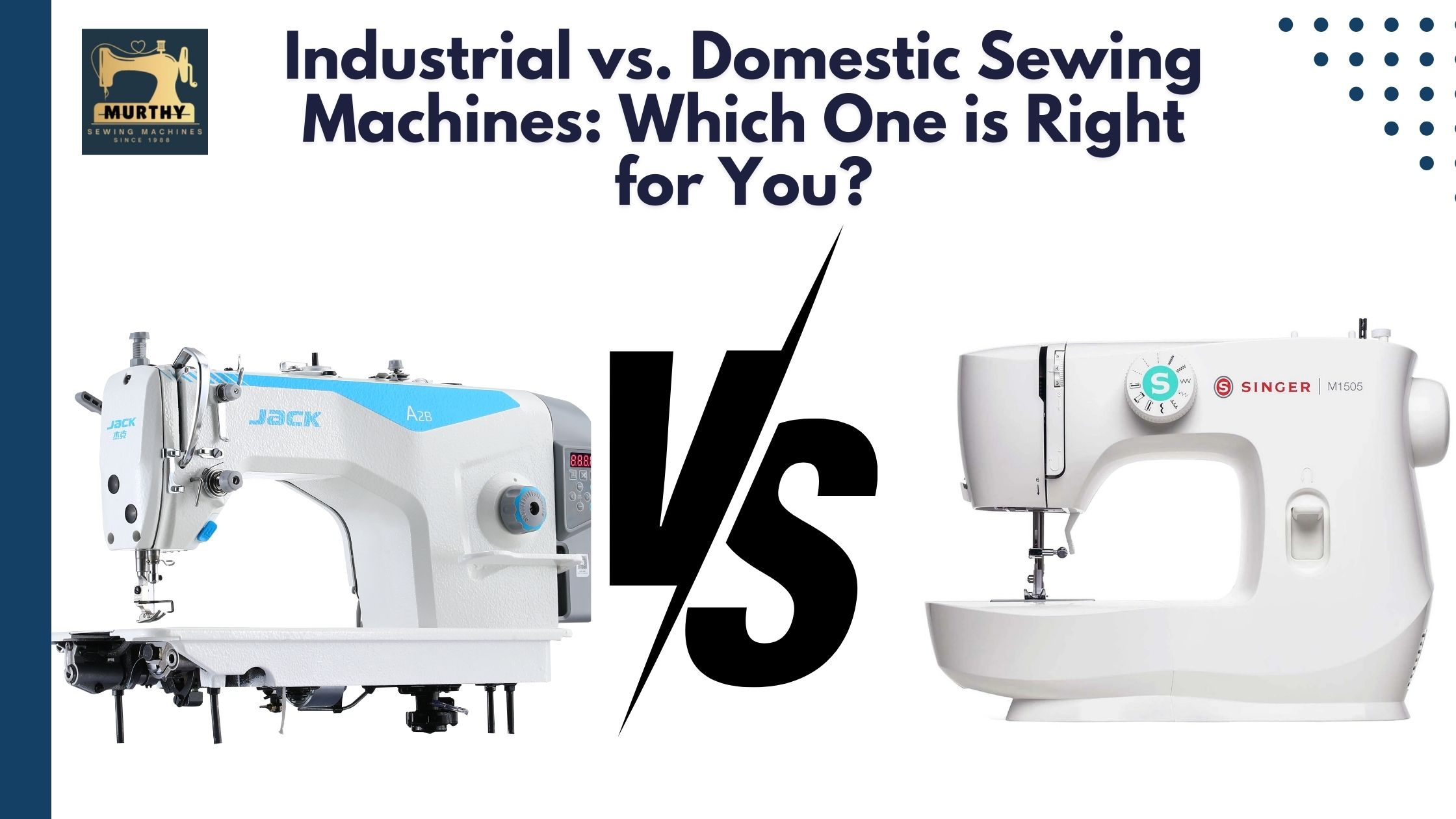
Choosing the right sewing machine depends on your sewing requirements, fabric types, and usage frequency. While both industrial and domestic sewing machines have their unique benefits, understanding their differences can help you make an informed decision. This guide will compare industrial vs. domestic sewing machines, outlining their features, pros, and cons to help you choose the best one for your needs.
1. What is a Domestic Sewing Machine?
A domestic sewing machine is designed for home use, hobby sewing, and light fabric stitching. These machines are compact, easy to operate, and suitable for beginners and hobbyists.
Features of Domestic Sewing Machines
- Lightweight and portable
Suitable for everyday sewing tasks - Offers basic and decorative stitches
Limited speed (600-1,200 stitches per minute) - Can sew light to medium-weight fabrics
- Comes with built-in automatic features for convenience
Pros:
✔ Easy to use and beginner-friendly
✔ More affordable than industrial machines
✔ Compact and space-saving
✔ Great for home sewing and DIY projects
Cons:
✘ Slower stitching speed compared to industrial machines
✘ Not ideal for heavy fabrics like leather or denim
✘ Limited durability for continuous or large-scale production
2. What is an Industrial Sewing Machine?
An industrial sewing machine is built for high-speed stitching, heavy-duty materials, and large-scale production. These machines are used in garment factories, tailoring businesses, and upholstery workshops.
Features of Industrial Sewing Machines
- High-speed stitching (1,500-5,500 stitches per minute)
- Heavy-duty build for continuous usage
- Can handle thick fabrics like denim, leather, and canvas
- Available in specialized models (lockstitch, overlock, embroidery, etc.)
- Requires a dedicated workspace
Pros:
✔ Fast and efficient for mass production
✔ Durable and long-lasting
✔ Handles heavy and multiple fabric layers with ease
✔ Specialized machine types for different sewing needs
Cons:
✘ Bulkier and requires more space
✘ Higher cost than domestic machines
✘ May require professional maintenance
3. Key Differences Between Industrial and Domestic Sewing Machines
| Feature | Domestic Sewing Machine | Industrial Sewing Machine |
| Purpose | Home use, small projects | Commercial production, heavy-duty sewing |
| Speed | 600-1,200 stitches per minute | 1,500-5,500 stitches per minute |
| Fabric Handling | Light to medium fabrics | Heavy and multiple fabric layers |
| Durability | Limited for occasional use | Designed for continuous operation |
| Features | Automatic settings, decorative stitches | Specialized machine types, high-speed operations |
| Cost | Affordable | Higher investment |
| Portability | Lightweight and compact | Heavy and stationary |
4. Which Sewing Machine Should You Choose?
Choose a Domestic Sewing Machine If:
✔ You sew occasionally for personal or home projects
✔ You need a compact, easy-to-use machine
✔ You work with light to medium-weight fabrics
✔ Your budget is limited
Choose an Industrial Sewing Machine If:
✔ You run a tailoring business or a garment workshop
✔ You work with thick fabrics like denim, leather, and canvas
✔ You need a high-speed machine for continuous use
✔ You require specialized machines for embroidery, overlock, or heavy stitching
5. Where to Buy the Best Sewing Machines?
Whether you’re looking for a domestic sewing machine for home projects or an industrial machine for large-scale production, Murthy Sewing Machines offers a wide range of high-quality sewing machines to meet your needs.
Frequently Asked Questions (FAQs)
1. Can I use an industrial sewing machine at home?
Yes, but industrial machines require a dedicated workspace due to their size and weight. They are best suited for professional use.
2. How long do domestic sewing machines last?
With proper maintenance, a domestic sewing machine can last 10-15 years for casual use.
3. Are industrial sewing machines difficult to use?
Industrial machines require some experience but are highly efficient once mastered. Training may be required for certain models.
4. What is the best sewing machine for quilting?
A domestic sewing machine with a walking foot or an industrial quilting machine is best for quilting projects.
5. How often should I service my sewing machine?
Domestic machines should be serviced every 6-12 months, while industrial machines need frequent maintenance due to heavy usage.