




Why Sewing Machine Stitch Is Uneven? Causes & Fixes

Introduction
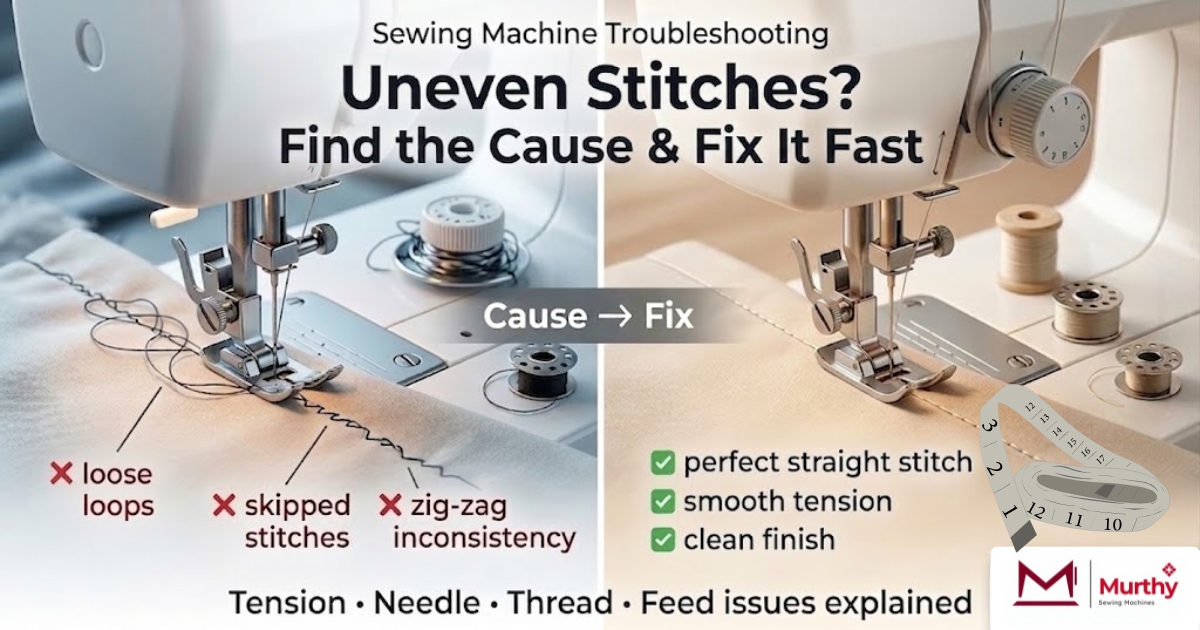
Uneven stitching is one of the most common problems faced by tailors and sewing machine users. Whether you are stitching a simple blouse or handling bulk garment work, inconsistent stitches can affect both the appearance and durability of your work.
The important thing to understand is this:
Uneven stitches are usually not a major machine problem—they are often caused by small issues in settings, handling, or maintenance.
This guide will help you identify the real causes of uneven stitches and fix them step by step.
What Does “Uneven Stitch” Mean?
Uneven stitching can appear in different ways:
- Loose stitches on one side
- Tight stitches on the other side
- Irregular stitch length
- Skipped or inconsistent stitches
These issues indicate that something in your machine setup is not balanced properly.
Common Causes of Uneven Stitching
1. Incorrect Thread Tension
This is the most common reason.
What happens:
- Upper thread too tight → fabric puckers
- Lower thread too loose → messy stitches
Fix:
- Adjust upper thread tension gradually
- Ensure bobbin tension is balanced
- Test on a scrap fabric before stitching
2. Wrong Needle Type or Size
Using the wrong needle for the fabric can affect stitch quality.
What happens:
- Needle struggles to pass through fabric
- Stitches become inconsistent
Fix:
- Use thin needles for light fabrics
- Use stronger needles for thick materials
- Replace bent or damaged needles
3. Poor Thread Quality
Low-quality thread can create uneven tension and break frequently.
What happens:
- Thread thickness varies
- Stitch formation becomes inconsistent
Fix:
- Use good quality, uniform thread
- Avoid old or weak threads
4. Improper Bobbin Winding
A poorly wound bobbin causes uneven thread flow.
What happens:
- Sudden tight or loose stitches
- Thread jerks during stitching
Fix:
- Wind bobbin evenly
- Avoid overfilling
- Ensure correct placement inside the machine
5. Feed Dog Issues
Feed dogs control fabric movement.
What happens:
- Fabric doesn’t move smoothly
- Stitch length becomes irregular
Fix:
- Clean feed dogs
- Check for wear or damage
- Ensure proper feed settings
6. Incorrect Presser Foot Pressure
Too much or too little pressure affects fabric movement.
What happens:
- Fabric slips or gets stuck
- Uneven stitching pattern
Fix:
- Adjust presser foot pressure based on fabric thickness
7. Machine Not Properly Maintained
Dust and lint buildup can affect performance.
What happens:
- Irregular stitching
- Increased friction
Fix:
- Clean machine regularly
- Oil moving parts as recommended
- Schedule periodic servicing
8. Fabric Type Mismatch
Different fabrics behave differently during stitching.
What happens:
- Stretch fabrics cause uneven stitches
- Thick fabrics resist smooth feeding
Fix:
- Adjust machine settings based on fabric
- Use appropriate needles and foot attachments
How to Diagnose the Problem Step by Step
If your stitches are uneven, follow this simple process:
- Check thread tension
- Replace needle
- Rewind bobbin
- Test with good quality thread
- Clean feed dogs and machine
- Adjust presser foot pressure
Testing step by step helps identify the exact issue quickly.
How to Maintain Consistent Stitch Quality
To avoid uneven stitching in the future:
- Always use the correct needle and thread
- Keep your machine clean
- Adjust tension before starting new fabric
- Test stitching on scrap material
- Avoid forcing fabric while stitching
Consistency comes from proper setup and handling.
What Works Best for Chennai Tailors?
In Chennai, tailoring work often involves:
- Mixed fabrics (cotton, silk, synthetic)
- Daily usage
- High humidity conditions
So maintaining your machine becomes even more important.
Machines with:
- Stable tension systems
- Smooth feed mechanisms
- Low vibration
perform better in these conditions.
Buyer Guidance: When Should You Upgrade Your Machine?
If you are facing frequent stitch issues even after proper adjustments, it may be time to upgrade.
Consider upgrading if:
- Machine struggles with certain fabrics
- Frequent maintenance is required
- Stitch quality is inconsistent despite proper setup
Modern industrial machines provide better control and consistency.
Choosing the Right Support in Chennai
Sometimes, uneven stitching issues require expert inspection.
A reliable dealer can help you:
- Diagnose the real problem
- Adjust machine settings properly
- Suggest the right machine if needed
Murthy Sewing Machines in Chennai supports tailoring professionals with machine guidance, setup assistance, and troubleshooting help.
Conclusion
Uneven stitching is a common issue, but it is usually easy to fix when you understand the cause.
Most problems are related to tension, needle, thread, or maintenance—not the machine itself. By following the right setup and care routine, you can achieve smooth, consistent stitches every time.
Understanding your machine is the key to improving your stitching quality.
FAQs
Why is my sewing machine making loose stitches?
Loose stitches are usually caused by incorrect upper thread tension or bobbin issues.
How do I fix uneven stitch length?
Check feed dogs, adjust stitch settings, and ensure smooth fabric movement.
Can a bad needle cause uneven stitching?
Yes, a bent or incorrect needle can directly affect stitch quality.
Why does my sewing machine stitch differently on top and bottom?
This is typically due to imbalance in upper and lower thread tension.
How often should I service my sewing machine?
Regular servicing every few months helps maintain consistent performance.