




How to Maintain a Sewing Machine at Home for Long-Lasting Performance

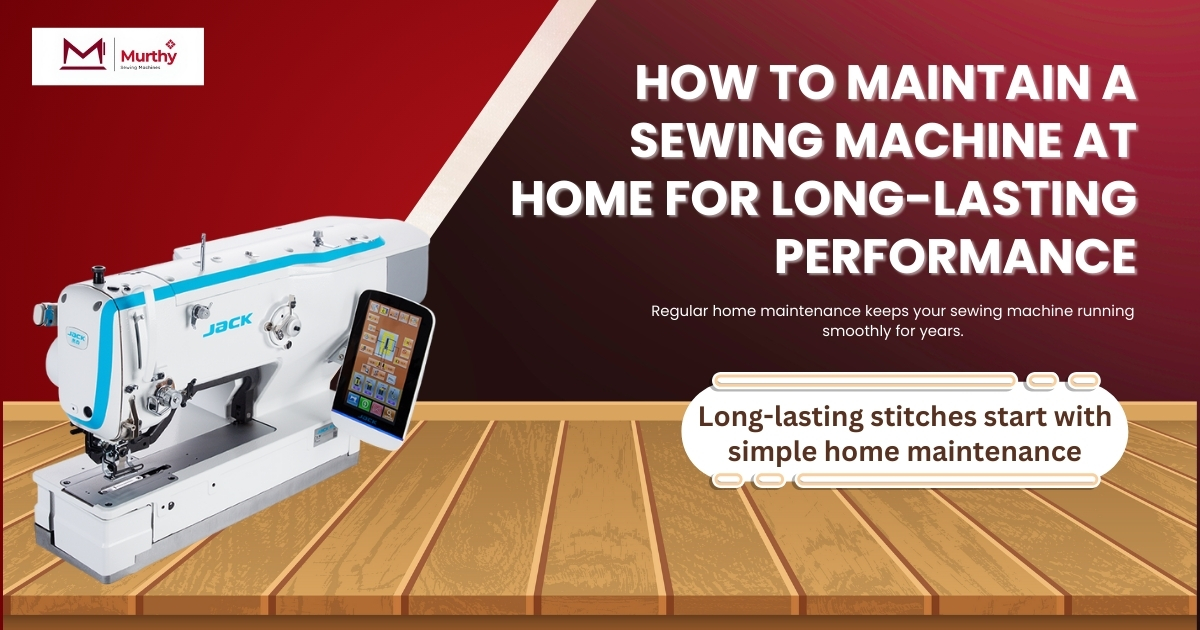
A sewing machine is a long-term household investment. Whether it is used daily for alterations or occasionally for repairs, proper maintenance plays a major role in how well the machine performs over time. Many stitching problems that users face—uneven stitches, thread breaks, or noisy operation—are often caused by simple maintenance issues rather than machine defects.
This guide explains how to maintain a sewing machine at home using easy, practical steps that any home user can follow. Regular care not only improves stitch quality but also helps your sewing machine last longer with fewer service issues.
Why Sewing Machine Maintenance Matters
Home sewing machines are designed to work smoothly when kept clean and properly adjusted. Dust, lint, and improper handling slowly affect performance if ignored.
Good maintenance helps:
- Maintain consistent stitch quality
- Reduce thread breakage and fabric pulling
- Prevent unnecessary repairs
- Extend the overall life of the machine
- Keep stitching comfortable and quiet
Even basic care done regularly can make a noticeable difference.
Basic Sewing Machine Care Every Home User Should Follow
Keep the Machine Clean
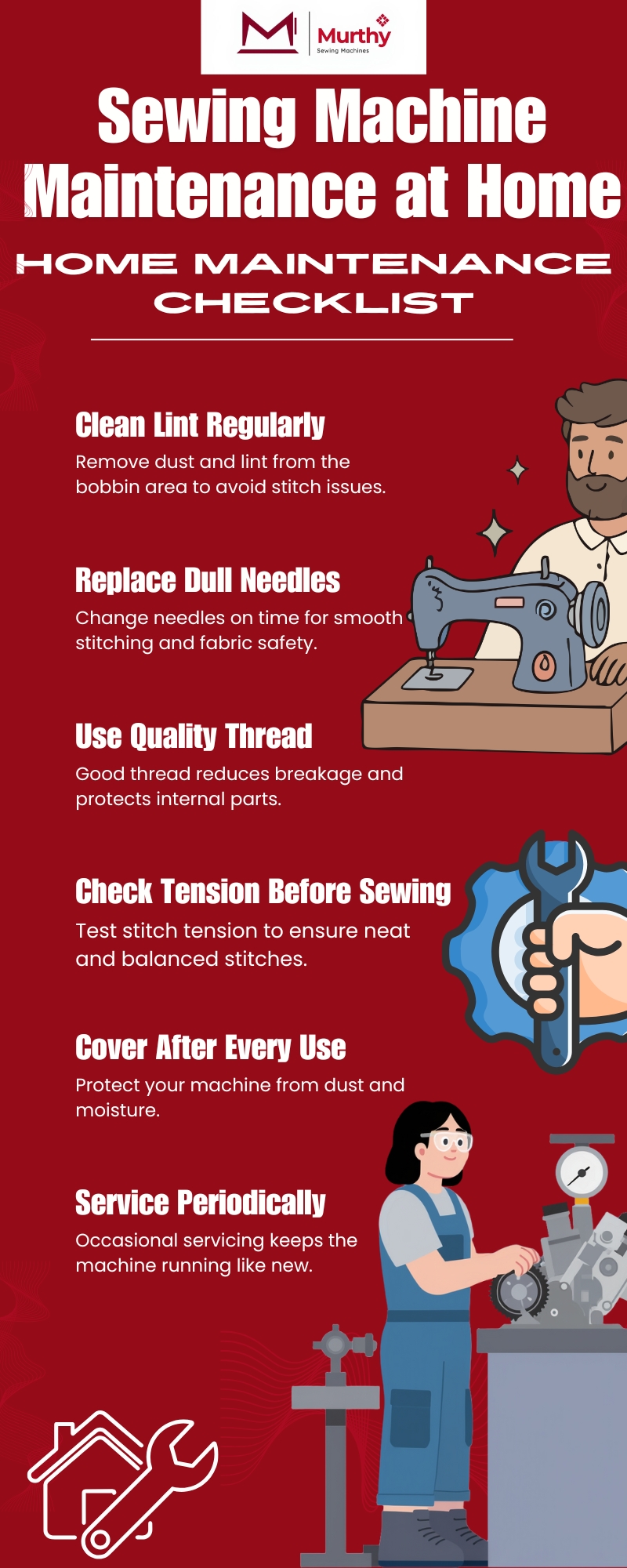
Lint and dust collect around the needle plate, bobbin area, and feed dogs during stitching. Cleaning these areas regularly prevents jamming and uneven stitches.
Use a soft brush to remove lint and avoid blowing air directly into the machine, as it can push dust further inside.
Use the Right Needle and Thread
Using the wrong needle size or poor-quality thread can damage fabric and strain the machine. Always choose a needle suitable for the fabric you are stitching and replace it when it becomes dull or bent.
Good thread quality reduces breakage and helps maintain smooth stitch formation.
Oil the Machine When Required
Some sewing machines need occasional oiling to keep internal parts moving smoothly. Apply oil only to recommended areas and avoid over-oiling, as excess oil can attract dust.
If your machine does not require oiling, keep it clean and dry as recommended.
Check Tension Settings Regularly
Incorrect tension can cause loose stitches, puckering, or thread breakage. Before starting a project, test stitching on scrap fabric and adjust tension if needed.
Regular checks help maintain stitch balance and prevent unnecessary wear.
Daily and Weekly Maintenance Habits
Small habits make a big difference when practiced consistently.
After Each Use
- Remove lint from the bobbin area
- Cover the machine to prevent dust accumulation
- Store the foot pedal and power cord neatly
Weekly or Regular Use
- Clean the needle plate area
- Check needle condition
- Inspect thread path for tangles
These steps take only a few minutes but significantly improve machine health.
Common Sewing Machine Problems Caused by Poor Maintenance
Many common issues are avoidable with basic care:
- Skipped stitches caused by dull needles
- Noisy operation due to lack of cleaning or oiling
- Thread breakage from lint buildup
- Uneven stitching caused by incorrect tension
Understanding these causes helps users fix small issues early instead of waiting for bigger problems.
How Fabric Choice Affects Machine Maintenance
Different fabrics produce different amounts of lint and stress on the machine. For example:
- Cotton and blended fabrics produce more lint
- Denim and thicker materials increase needle wear
- Synthetic fabrics may require tension adjustments
Cleaning frequency should increase when stitching heavy or lint-producing fabrics.
When to Get Professional Servicing
Even with regular home maintenance, professional servicing is important.
Consider servicing when:
- The machine makes unusual noise
- Stitch quality remains poor despite adjustments
- The machine has not been serviced for a long time
- Parts feel tight or movement is restricted
Timely servicing prevents long-term damage and restores smooth operation.
FAQs
How often should I clean my sewing machine at home?
Cleaning after regular use is recommended, especially around the bobbin area. Light users can clean weekly, while frequent users should clean more often.
Does oiling improve sewing machine performance?
Oiling helps if the machine requires it. Use sewing machine oil sparingly and only on recommended parts.
Why does my sewing machine make noise during stitching?
Noise is often caused by lint buildup, lack of oil, or incorrect threading. Cleaning and proper setup usually solve the issue.
Can poor thread damage a sewing machine?
Yes, low-quality thread can cause breakage, lint buildup, and uneven stitching, which affects machine performance over time.
How do I know when my sewing machine needs servicing?
If problems persist after basic maintenance or the machine feels stiff or noisy, professional servicing is recommended.
Does regular maintenance really extend sewing machine life?
Yes, regular care reduces wear, prevents damage, and keeps the machine performing well for many years.
Conclusion
Maintaining a sewing machine at home does not require technical expertise. Simple habits like regular cleaning, correct needle usage, proper threading, and timely servicing go a long way in preserving performance.
When cared for properly, a sewing machine remains smooth, reliable, and enjoyable to use—making everyday stitching and repairs easier for years to come.