



Which Sewing Machine Is Best for Bulk Production vs Custom Stitching?

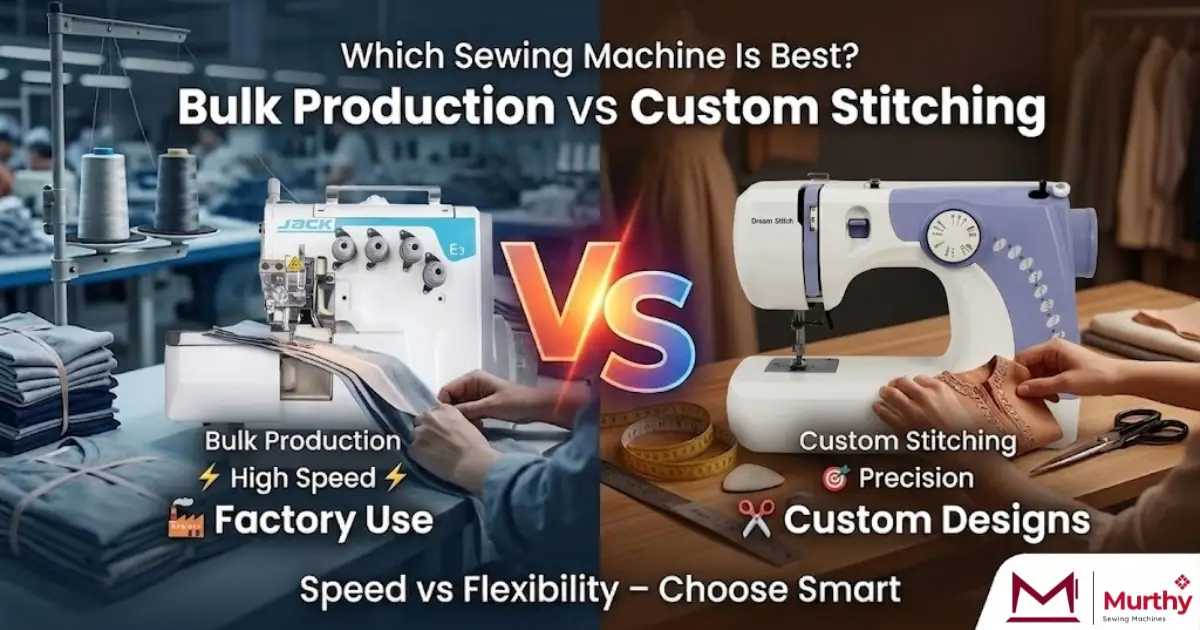
Choosing the right sewing machine depends heavily on how you plan to use it. Many buyers make the mistake of selecting a machine based on features or price without considering their actual workload.
There is a clear difference between machines designed for bulk production and those meant for custom stitching. Understanding this difference helps you avoid performance issues, wasted investment, and workflow inefficiencies.
This guide explains both use cases in a practical way so you can make the right decision.
Understanding the Two Work Types
Before selecting a machine, you need to define your work category.
Bulk Production
- High volume stitching
- Repetitive designs
- Speed and efficiency are critical
- Used in garment factories and production units
Custom Stitching
- Low volume, high variation work
- Different designs for each piece
- Focus on precision and flexibility
- Used in tailoring shops and home setups
The machine requirements for both are completely different.
Sewing Machines for Bulk Production
Bulk production requires machines that can handle continuous work without performance drop.
Key Requirements:
- High stitching speed
- Consistent output
- Durable build
- Minimal downtime
Suitable Machines:
Industrial Sewing Machines
These are the most commonly used machines for production environments.
Why they work:
- Designed for continuous operation
- High-speed stitching
- Strong motor performance
- Stable output even for long hours
Direct Drive Machines
Modern industrial machines come with direct drive motors.
Benefits:
- Energy-efficient
- Less vibration
- Better control at high speed
Common Machines Used in Production:
- Straight stitch industrial machines
- Overlock machines (for edge finishing)
- Interlock machines (for stretch fabrics)
In bulk production, multiple machines are often used together.
Advantages of Using Industrial Machines for Bulk Work
- Faster production output
- Consistent stitch quality
- Suitable for heavy fabrics
- Lower long-term cost per piece
Limitations
- Not flexible for design variations
- Requires operator skill
- Not ideal for small or creative work
These machines are built for speed, not versatility.
Sewing Machines for Custom Stitching
Custom stitching requires flexibility, control, and ease of use.
Key Requirements:
- Ability to handle different designs
- Easy adjustments
- Moderate speed
- Precision stitching
Suitable Machines:
Domestic Sewing Machines
Ideal for home-based tailoring and small custom work.
Why they work:
- Multiple stitch options
- Easy to operate
- Compact and flexible
Semi-Industrial Machines
These offer a balance between speed and flexibility.
Best for:
- Boutique setups
- Medium workload
Advantages of Custom Stitching Machines
- Flexible for different designs
- Easy to switch between tasks
- Suitable for beginners and professionals
- Lower initial investment
Limitations
- Not suitable for continuous heavy use
- Slower compared to industrial machines
- May struggle with thick fabrics
Key Differences: Bulk vs Custom Machines
1. Speed
- Bulk Machines → Very high speed
- Custom Machines → Moderate speed
2. Flexibility
- Bulk Machines → Low flexibility
- Custom Machines → High flexibility
3. Usage Time
- Bulk Machines → Long continuous hours
- Custom Machines → Short to moderate usage
4. Fabric Handling
- Bulk Machines → Handles heavy fabrics better
- Custom Machines → Better for mixed fabrics
5. Skill Requirement
- Bulk Machines → Requires trained operator
- Custom Machines → Easy to learn
Real-World Scenarios
Garment Factory Setup
Tailoring Shop
- Straight stitch machine + zig zag machine
- Focus on design flexibility
Home-Based Stitching
- Domestic sewing machine
- Focus on ease of use
Can One Machine Do Both?
This is a common question.
The answer is not effectively.
Some machines try to balance both, but:
- They won’t match industrial speed
- They won’t offer full flexibility
Best Approach:
Use the right machine for the right purpose.
How to Choose Based on Your Need
Choose Bulk Production Machine If:
- You have continuous high-volume work
- You run a garment unit
- Speed is your priority
Choose Custom Stitching Machine If:
- You handle unique designs
- You work on different fabrics
- You need flexibility
Hybrid Setup (Best for Growing Businesses)
If you are scaling your tailoring business:
Start with:
- One industrial sewing machine
- One domestic or zig zag machine
This combination gives both speed and flexibility.
Common Mistakes Buyers Make
- Buying industrial machines for home use
- Using domestic machines for heavy production
- Ignoring future workload
- Choosing based only on price
Always match the machine to your workflow.
Final Thoughts
There is no single “best” sewing machine — only the right machine for your work type.
- Bulk production requires speed, durability, and consistency
- Custom stitching requires flexibility, control, and precision
Understanding this difference helps you invest wisely and avoid long-term issues.
If you are in Chennai and unsure which machine suits your requirement, Murthy Sewing Machines can guide you based on your exact usage, whether it’s production or custom tailoring.
FAQs
Which sewing machine is best for bulk production?
Industrial sewing machines with direct drive motors are best for bulk production due to their speed and durability.
Can I use a domestic sewing machine for bulk work?
You can, but it is not recommended for long-term use as it may reduce machine life and performance.
What is the best machine for custom stitching?
Domestic or semi-industrial sewing machines are ideal for custom stitching due to their flexibility.
Do I need multiple machines for a tailoring business?
Yes, a combination of machines (straight stitch, overlock, etc.) improves efficiency and output quality.
How do I decide between industrial and domestic machines?
Your workload, fabric type, and usage frequency should determine your choice.