



What Is a Feed Mechanism in Sewing Machines?

Introduction
When people choose a sewing machine, they usually focus on speed, brand, or price. But one of the most important factors that directly affects stitch quality is something most buyers ignore—the feed mechanism.
The feed mechanism controls how fabric moves under the needle. If this system is not suited to your fabric type or stitching work, you may face issues like uneven stitching, fabric slipping, or poor finishing.
In this guide, you’ll clearly understand what a feed mechanism is, the difference between drop feed and walking foot systems, and which one is suitable for your sewing needs.
What Is a Feed Mechanism in a Sewing Machine?
A feed mechanism is the system that moves the fabric forward during stitching.
It works using a component called feed dogs, which are small metal teeth located below the needle plate. These teeth grip the fabric and push it forward as the needle stitches.
This movement ensures:
- Even stitch spacing
- Smooth fabric flow
- Consistent stitching quality
Without proper feeding, the fabric may bunch, stretch, or move unevenly.
Types of Feed Mechanisms in Sewing Machines
There are multiple feed systems, but the most commonly used are:
- Drop Feed
- Walking Foot Feed
Understanding these two will help you choose the right machine for your work.
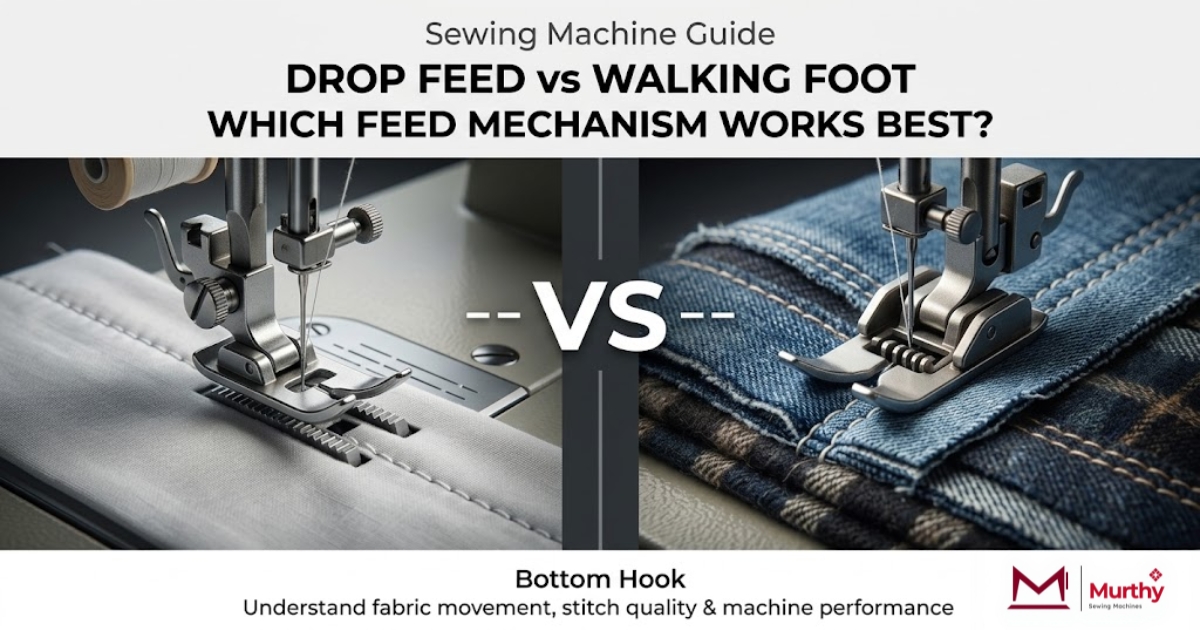
What Is Drop Feed Mechanism?
Drop feed is the most commonly used feed system in sewing machines.
How It Works:
- Feed dogs move up and down
- They push the fabric forward from the bottom
- The top of the fabric is not actively controlled
Where It Is Used:
- Domestic sewing machines
- Industrial straight stitch machines
- General tailoring work
Advantages:
- Simple and reliable
- Suitable for most fabrics
- Easy to maintain
Limitations:
- Fabric layers may shift
- Not ideal for thick or slippery materials
- Can cause uneven feeding in layered stitching
Drop feed works best for basic tailoring and general stitching.
What Is Walking Foot Mechanism?
Walking foot is an advanced feed system designed for better control.
How It Works:
- Both top and bottom layers of fabric move together
- The presser foot also moves (walks) with the fabric
- This ensures synchronized feeding
Where It Is Used:
- Heavy fabrics (denim, leather)
- Multiple fabric layers
- Upholstery and industrial work
Advantages:
- Prevents fabric shifting
- Maintains alignment of layers
- Ideal for thick materials
Limitations:
- Slightly slower than drop feed
- More complex mechanism
- Higher cost
Walking foot is best for precision work with multiple layers or heavy fabrics.
Drop Feed vs Walking Foot – Key Differences
Feature | Drop Feed | Walking Foot |
Fabric Control | Bottom only | Top + Bottom |
Best For | Regular fabrics | Heavy / layered fabrics |
Stitch Consistency | Moderate | High |
Complexity | Simple | Advanced |
Cost | Lower | Higher |
When Should You Choose Drop Feed?
Choose drop feed machines if:
- You are doing regular tailoring work
- Working with cotton, silk, or light fabrics
- Running a boutique or home tailoring setup
- Need a cost-effective solution
Most tailoring shops in Chennai use drop feed machines for daily work.
When Should You Choose Walking Foot?
Choose walking foot machines if:
- You work with denim, leather, or thick fabrics
- Stitching multiple layers together
- Running upholstery or heavy garment production
- Need precision in layered stitching
How Feed Mechanism Affects Stitch Quality
The feed system directly impacts:
- Stitch alignment
- Fabric control
- Finish quality
- Production efficiency
For example:
- Drop feed may cause layer shifting in thick fabrics
- Walking foot ensures even feeding and professional finishing
Choosing the wrong feed system often leads to stitching problems.
Common Problems Caused by Wrong Feed Mechanism
- Uneven stitches
- Fabric slipping
- Layers not aligning properly
- Difficulty handling thick materials
Many of these issues are not machine defects—they are feed mechanism mismatches.
Buyer Guidance: What Should You Choose?
For Ladies Tailoring / Boutique Work:
Drop feed machine is sufficient and widely used.
For Heavy Fabric Stitching (Denim, Bags):
Walking foot machine is recommended.
For Garment Units:
Use a combination of both based on production needs.
Understanding your work type is more important than choosing a popular machine.
Choosing the Right Machine in Chennai
Many buyers in Chennai are not aware of feed mechanisms and end up selecting machines based only on brand or price.
A knowledgeable dealer can help you:
- Understand your stitching requirements
- Suggest the correct feed mechanism
- Avoid long-term issues
Murthy Sewing Machines in Chennai helps customers choose machines based on actual usage, ensuring better performance and long-term reliability.
Conclusion
The feed mechanism is one of the most important yet overlooked aspects of a sewing machine.
While drop feed works well for most tailoring needs, walking foot provides better control for heavy and layered fabrics. Choosing the right system improves stitch quality, reduces errors, and enhances overall productivity.
Understanding this one factor can completely change how efficiently you work.
FAQs
What is the purpose of a feed mechanism in sewing machines?
It controls how fabric moves during stitching, ensuring even stitch spacing and smooth operation.
Which is better: drop feed or walking foot?
It depends on your work. Drop feed is good for regular fabrics, while walking foot is better for heavy or layered materials.
Can I use drop feed for heavy fabrics?
Yes, but it may cause uneven stitching or fabric shifting in thicker materials.
Is walking foot necessary for tailoring?
Not always. It is mainly required for heavy-duty or layered stitching work.
Why is my fabric not moving properly in the sewing machine?
This could be due to feed dog issues or using the wrong feed mechanism for your fabric type.