


What are the Disadvantage of a Treadle Sewing Machine?

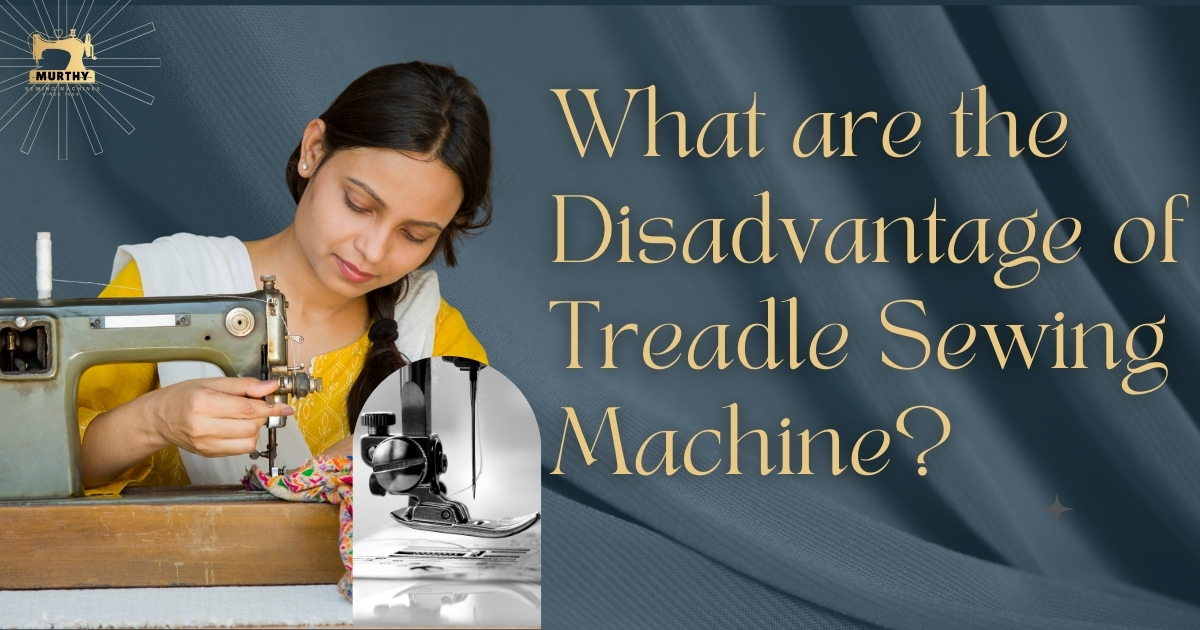
Treadle sewing machines were once the pride of every tailor’s shop in Chennai. They run without electricity, last for decades, and have a nostalgic charm.
But with modern tailoring needs, fast delivery expectations, and the rise of delicate fabrics, treadle machines come with several limitations.
If you’re planning to buy a new sewing machine or upgrade your existing setup, understanding the disadvantages of a treadle sewing machine will help you make the right choice.
1. Slow Stitching Speed Compared to Modern Machines
Treadle sewing machines depend on foot movement.
So the speed depends on how fast the user can pedal.
Why this is a problem:
- Cannot match the speed of direct-drive or motorized machines
- Takes more time to finish blouses, dresses, and large orders
- Not suitable for boutiques with daily workload
- Not ideal for urgent tailoring deliveries (very common in Chennai)
For busy tailor shops, this directly affects productivity.
2. Requires Physical Effort and Can Cause Fatigue
Continuous pedaling can cause:
- Leg pain
- Knee strain
- Back discomfort
- Tiredness after long stitching sessions
This is one of the biggest disadvantages for tailors who work long hours.
In Chennai’s hot weather, using a treadle machine becomes even more tiring.
3. Not Suitable for Delicate Fabrics Like Silk, Chiffon, or Organza
Treadle machines do not offer:
- Fine tension control
- Precision speed
- Smooth start-stop control
These are essential for delicate materials commonly used in Chennai:
- Silk blouses
- Bridal gowns
- Chiffon dupattas
- Soft rayon
- Designer wear
The high vibration and manual pedaling can easily damage delicate fabrics.
4. Limited Stitch Options – Only Straight Stitch
A major disadvantage is that treadle machines can only perform:
- Straight stitch
- Forward/backward stitch
…and nothing else.
They cannot do:
- Zig-zag
- Decorative stitches
- Buttonholes
- Pico
- Pattern stitches
This limits creativity for boutique owners, fashion students, and designers.
5. Requires Regular Manual Maintenance
Treadle machines demand:
- Frequent oiling
- Belt adjustments
- Wheel lubrication
- Manual alignment
If maintenance is ignored, the machine becomes noisy, stiff, and difficult to use.
Modern machines, especially direct-drive models, need much less maintenance.
6. Takes More Space and Needs a Dedicated Table
A treadle machine:
- Is bigger
- Needs a wooden table
- Occupies more room
- Is difficult to move
This is a problem for:
- Small tailoring shops
- Home users with limited space
- Students
- Boutique owners working from home
Modern machines are compact and easy to shift.
7. Noisy Operation and Vibration
The mechanical movement of:
- The treadle
- The wheel
- The belt
…creates noticeable vibration and noise.
This affects:
- Stitch accuracy
- Comfort
- Fabric control
Direct-drive machines, on the other hand, run almost silently.
8. Not Beginner-Friendly for Today’s Users
Most beginners today prefer:
- Easy start-stop control
- Automatic needle positioning
- Adjustable speed
- Lightweight machines
Treadle machines are harder for beginners because pedaling and stitching must happen together with perfect coordination.
It takes time to learn, and many new learners lose confidence and give up.
9. Cannot Handle Thick Fabrics Efficiently
Treadle machines struggle with:
- Thick denim
- Heavy canvas
- Multiple fabric layers
- Uniform materials
The lack of motor power means:
- Needles break easily
- Stitches become uneven
- Fabric struggles to move
Modern industrial and direct-drive machines handle these fabrics effortlessly.
10. Not Future-Proof for Modern Tailoring Needs
Chennai’s tailoring industry has evolved. Customers expect:
- Precise finishing
- Fine stitching on delicate fabrics
- Fast delivery
- Consistent quality
Treadle machines cannot meet modern requirements compared to:
- Usha S2
- Jack F4 / F5
- Juki DDL series
- Usha Wonder Stitch
- Brother FS series
- Singer automatic models
For boutique, blouse design, or commercial tailoring, treadle machines are outdated.
Should You Still Use a Treadle Machine?
A treadle machine is useful only if you:
- Have no electricity access
- Want a simple straight-stitch machine
- Prefer traditional pedal movement
- Stitch occasionally
- Work with basic cotton fabrics
For modern tailoring requirements, treadle machines are not recommended.
Boutique owners, fashion students, and professional tailors in Chennai should upgrade to:
- Direct-drive machines
- Zig-zag machines
- Automatic domestic machines
- Industrial lockstitch machines
They offer better finishing, accuracy, speed, and comfort.
FAQs
Is a treadle machine good for beginners?
Not ideal. It requires pedaling skill and coordination, making it hard for new learners.
Can treadle machines stitch silk or thin fabrics?
No. They lack the precision and control needed for delicate materials.
Does a treadle machine use more space?
Yes. It needs a dedicated table and occupies more room than modern compact machines.
Are treadle machines still used in Chennai tailoring shops?
Some older shops use them, but most have upgraded to direct-drive and motorized models.
Should I buy a treadle machine for boutique work?
No. Boutiques need zig-zag, decorative stitches, and delicate fabric handling—none of which a treadle machine supports.