



Difference Between Domestic and Industrial Sewing Machines


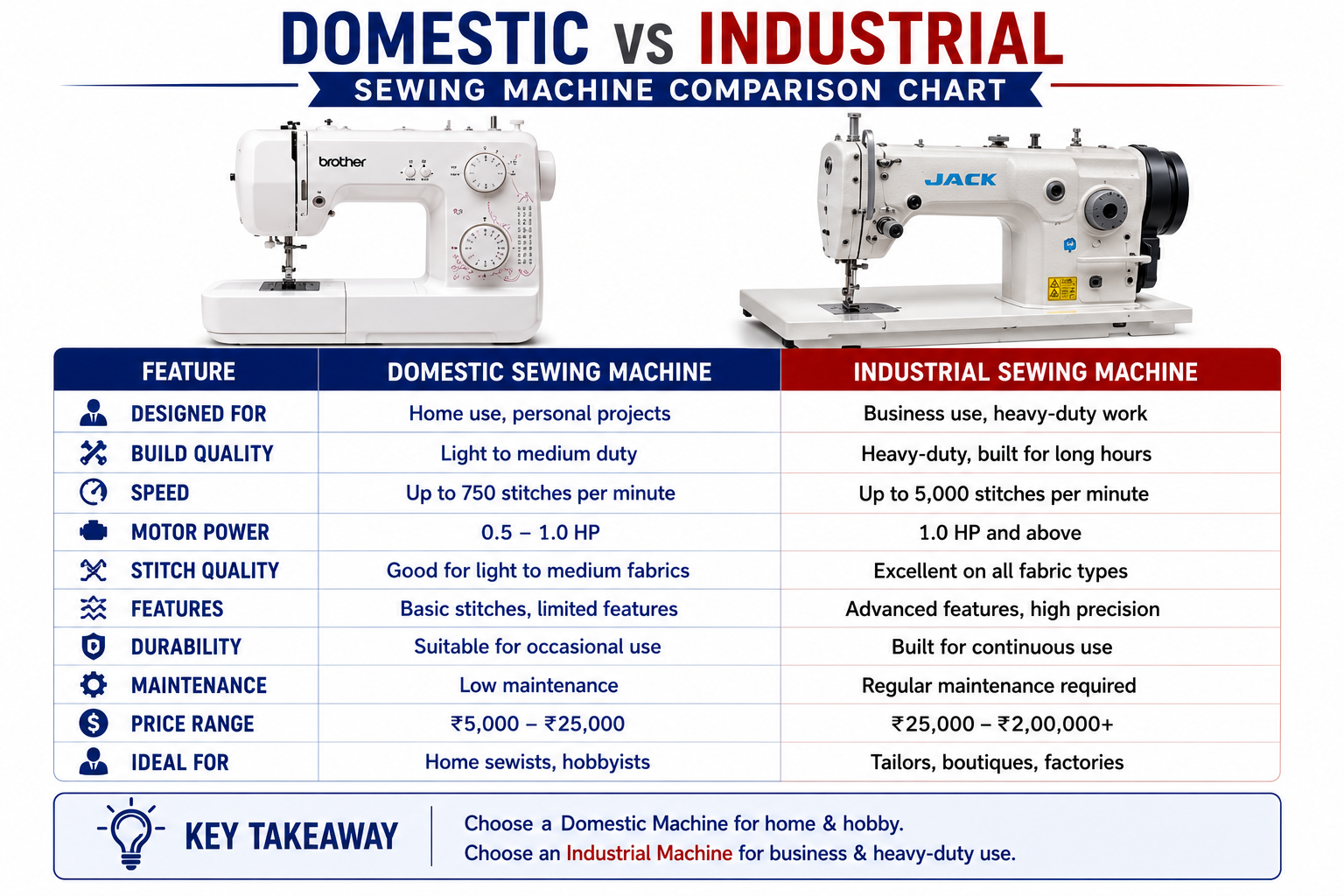
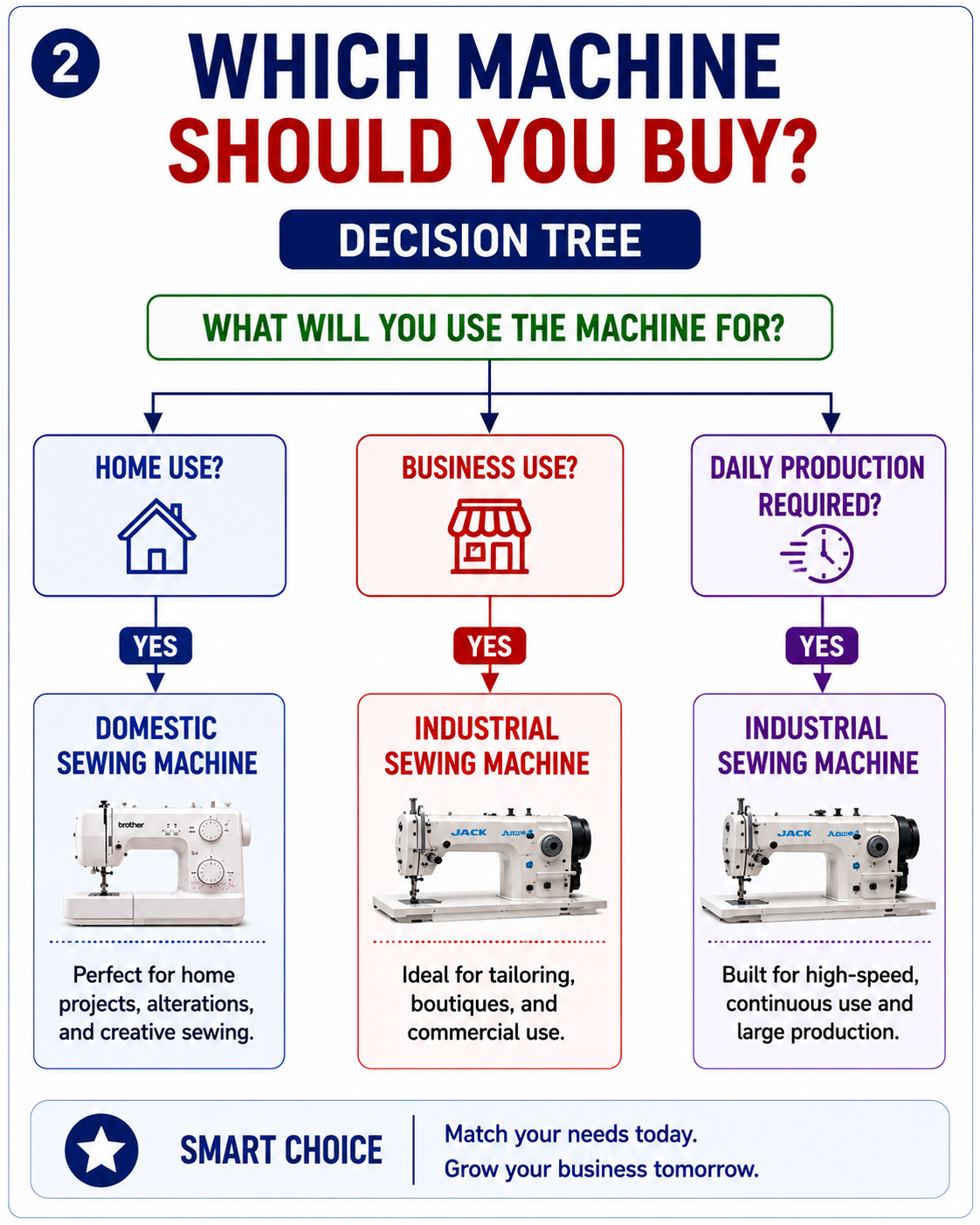
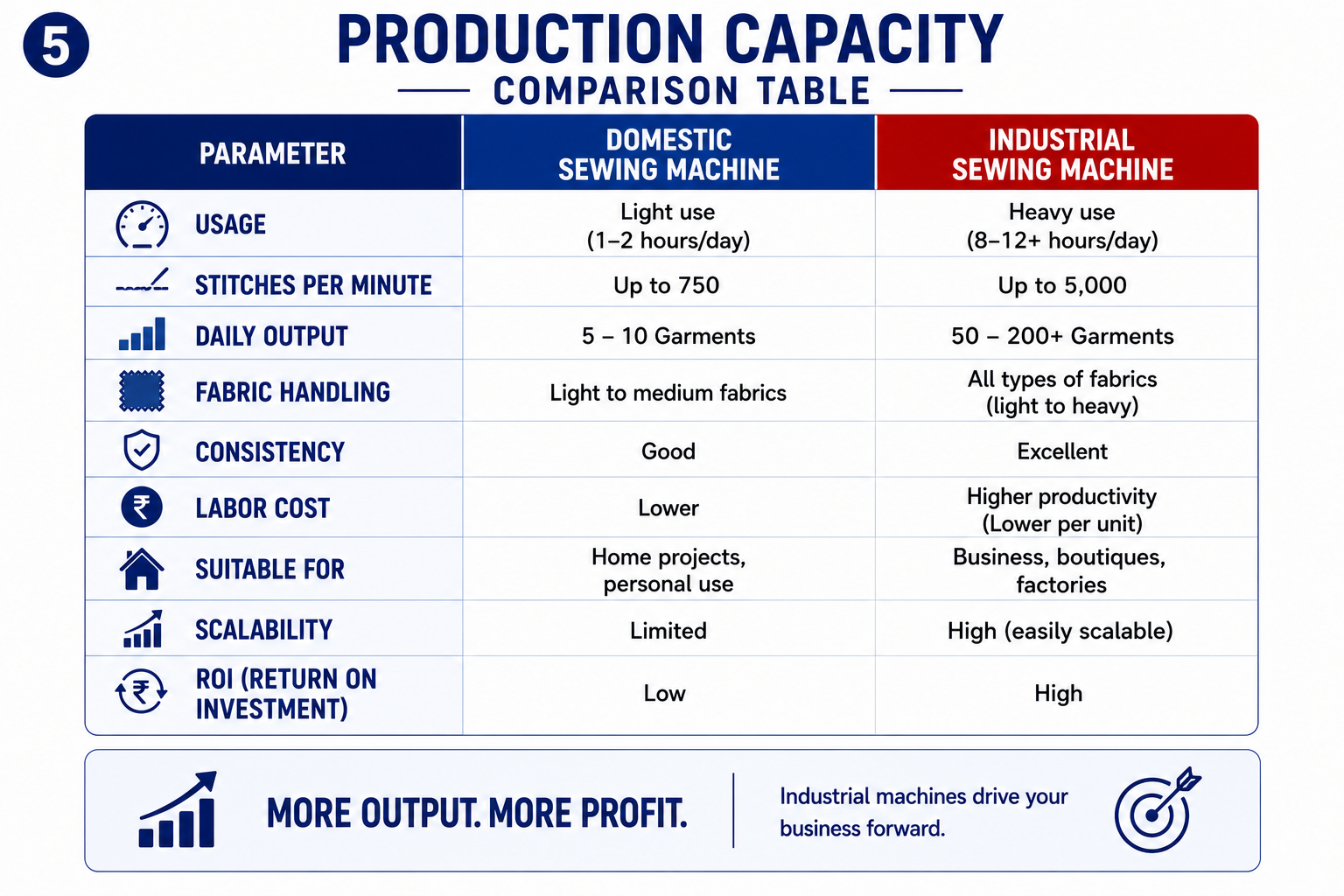
A domestic sewing machine is designed for home use, learning, alterations, and occasional sewing projects, while an industrial sewing machine is built for continuous operation, higher speeds, heavier workloads, and professional production environments. If you sew occasionally at home, a domestic machine is often sufficient. If you run a tailoring shop, boutique, or garment manufacturing business, an industrial sewing machine is usually the better investment.
Domestic vs Industrial Sewing Machines: Why This Comparison Matters
One of the most common mistakes sewing machine buyers make is purchasing a machine that doesn’t match their actual workload. Some people buy industrial machines for occasional home use, while others attempt commercial production using domestic machines.
Understanding the differences between domestic and industrial sewing machines can help you make a smarter investment, improve productivity, reduce maintenance issues, and achieve better stitching results.
Before choosing a machine, it’s important to evaluate your sewing goals, production requirements, fabric types, and long-term plans.
What Is a Domestic Sewing Machine?
A domestic sewing machine is designed primarily for personal and home-based sewing applications. These machines are compact, user-friendly, and suitable for a variety of stitching tasks.
They are commonly used for:
- Home sewing
- Learning sewing
- Clothing alterations
- Hobby projects
- School projects
- Small tailoring work
- Decorative stitching
Domestic machines are generally designed for moderate workloads rather than continuous commercial operation.
Common Features of Domestic Sewing Machines
Compact Design
Most domestic machines are lightweight and easy to move.
Multiple Stitch Options
Many modern domestic machines include utility and decorative stitches.
Beginner-Friendly Operation
Controls are designed to be simple and easy to understand.
Lower Power Consumption
Domestic machines typically consume less electricity.
Affordable Investment
They are usually more budget-friendly compared to industrial machines.
What Is an Industrial Sewing Machine?
An industrial sewing machine is designed for continuous operation in professional environments such as tailoring shops, boutiques, garment factories, and production units.
These machines prioritize speed, durability, consistency, and productivity over decorative features.
Industrial machines are commonly used for:
- Garment manufacturing
- Tailoring businesses
- Uniform production
- Bulk stitching
- Boutique operations
- Upholstery work
- Commercial textile production
They are built to handle demanding workloads throughout the day.
Common Features of Industrial Sewing Machines
High-Speed Operation
Industrial machines can sew significantly faster than domestic machines.
Heavy-Duty Construction
Built with stronger components for long-term durability.
Continuous Work Capability
Designed to operate for extended hours.
Professional Stitch Quality
Consistent stitching performance across large production volumes.
Specialized Applications
Many industrial machines are built for specific sewing operations.
Domestic vs Industrial Sewing Machine: Side-by-Side Comparison
|
Feature |
Domestic Sewing Machine |
Industrial Sewing Machine |
|
Primary Use |
Home Sewing |
Commercial Sewing |
|
Speed |
Moderate |
High |
|
Workload Capacity |
Light to Moderate |
Heavy |
|
Portability |
Easy |
Limited |
|
Durability |
Good |
Excellent |
|
Continuous Usage |
Limited |
Designed for Continuous Use |
|
Power |
Lower |
Higher |
|
Stitch Variety |
More Decorative Options |
Application Specific |
|
Learning Curve |
Easier |
Moderate |
|
Initial Investment |
Lower |
Higher |

Advantages of Domestic Sewing Machines
Ideal for Beginners
Domestic machines provide an excellent learning platform.
Versatile for Home Projects
Users can handle repairs, alterations, and creative sewing projects.
Cost-Effective
A practical option for occasional sewing needs.
Easy to Store
Their compact design makes them suitable for smaller spaces.
Multiple Stitch Designs
Many domestic models include decorative stitch patterns.
Advantages of Industrial Sewing Machines
Higher Productivity
Industrial machines significantly improve output.
Faster Sewing Speed
Suitable for commercial production environments.
Better Performance on Heavy Fabrics
Industrial models handle thicker materials more efficiently.
Long-Term Reliability
Designed for demanding daily workloads.
Reduced Downtime
Built for consistent performance over long periods.
Which Fabrics Can Each Machine Handle?
|
Fabric Type |
Domestic Machine |
Industrial Machine |
|
Cotton |
Excellent |
Excellent |
|
Linen |
Good |
Excellent |
|
Denim |
Moderate |
Excellent |
|
Canvas |
Limited |
Excellent |
|
Leather |
Limited |
Specialized Models |
|
Uniform Fabric |
Good |
Excellent |
|
Heavy Garments |
Limited |
Excellent |
Common Mistakes Buyers Make
Choosing Based Only on Price
The cheapest machine may not meet your long-term requirements.
Buying an Industrial Machine for Occasional Use
Industrial machines are often unnecessary for basic home sewing.
Ignoring Future Growth
Many tailoring businesses outgrow domestic machines quickly.
Overlooking Production Requirements
Workload should be one of the biggest deciding factors.
Not Considering Available Space
Industrial machines generally require dedicated workspaces.
Domestic Sewing Machine Applications
Domestic machines are suitable for:
- Home stitching
- Alterations
- Hobby sewing
- Learning sewing
- School projects
- Decorative stitching
- Basic tailoring work
For users who sew occasionally, a domestic machine is often the most practical choice.
Industrial Sewing Machine Applications
Industrial machines are suitable for:
- Tailoring shops
- Boutiques
- Fashion production
- Uniform manufacturing
- Garment factories
- Bulk production environments
- Commercial sewing operations
They are designed to maximize efficiency and consistency.
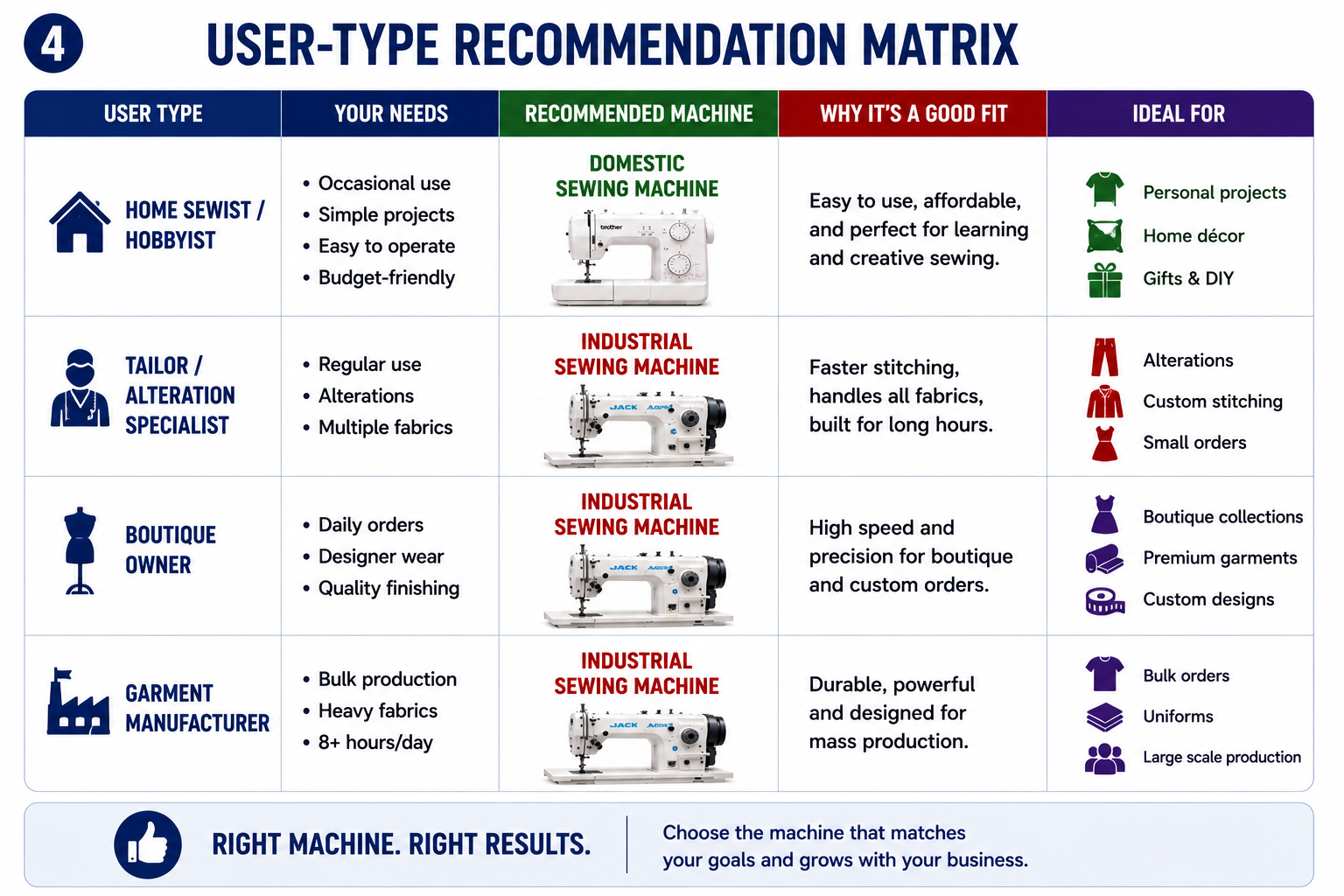
Which Machine Is Best for Different Users?
|
User Type |
Recommended Machine |
|
Beginner |
Domestic |
|
Home User |
Domestic |
|
Hobby Sewer |
Domestic |
|
Sewing Student |
Domestic |
|
Tailor |
Industrial |
|
Boutique Owner |
Industrial |
|
Fashion Designer |
Industrial |
|
Garment Manufacturer |
Industrial |
|
Uniform Producer |
Industrial |
Can a Domestic Machine Be Used for Business?
Yes, many people start small tailoring businesses using domestic sewing machines.
However, as workload increases, upgrading to an industrial sewing machine often becomes necessary to maintain efficiency and production capacity.
For occasional commercial work, a domestic machine may perform well. For daily production, industrial machines are generally more suitable.
Expert Recommendation
If your primary goal is learning sewing, performing alterations, handling occasional projects, or completing home-based stitching work, a domestic sewing machine is usually the better choice.
If you operate a tailoring shop, boutique, fashion studio, or garment production business, an industrial sewing machine will likely provide better productivity, durability, and long-term value.
The best sewing machine is not determined by size or price—it is determined by how well it supports your actual sewing requirements.
Why Buy from Murthy Sewing Machines?
Murthy Sewing Machines helps customers choose sewing machines based on actual workload, fabric requirements, production goals, and future business plans.
Whether you are a beginner purchasing your first machine or a business owner expanding production capacity, selecting the right machine can improve stitching quality, productivity, and long-term satisfaction.
One thought on “Difference Between Domestic and Industrial Sewing Machines”