




What Is GSM in Fabric? Sewing Machine Selection Guide

Introduction
When choosing a sewing machine, many people focus only on the machine itself. But an equally important factor is the fabric you are going to stitch.
One of the key terms used to describe fabric is GSM, and understanding it can completely change how you select your sewing machine.
If you choose a machine without considering GSM, you may face issues like poor stitch quality, needle breakage, or machine strain.
This guide will help you understand what GSM means and how it directly affects sewing machine selection.
What Is GSM in Fabric?
GSM stands for Grams per Square Meter.
It is a measurement used to determine the weight and thickness of fabric.
Simply put:
- Lower GSM = Light fabric
- Higher GSM = Thick / heavy fabric
This measurement helps you understand how heavy or dense a fabric is, which is crucial when selecting the right sewing machine.
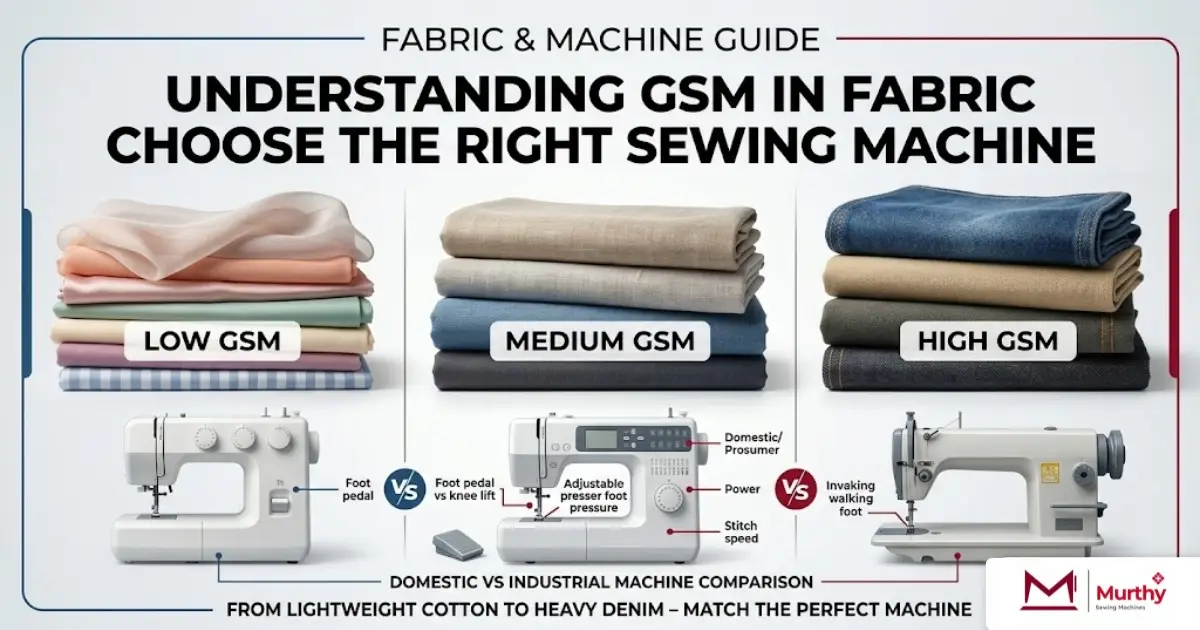
Understanding Fabric Types Based on GSM
Low GSM (Lightweight Fabrics)
Range: 30–150 GSM
Examples:
- Chiffon
- Silk
- Lightweight cotton
- Organza
Characteristics:
- Soft and delicate
- Easy to stretch or damage
- Requires precise stitching
Medium GSM (Standard Fabrics)
Range: 150–300 GSM
Examples:
- Regular cotton
- Linen
- Blended fabrics
- Salwar materials
Characteristics:
- Balanced thickness
- Suitable for everyday stitching
- Most commonly used in tailoring
High GSM (Heavy Fabrics)
Range: 300+ GSM
Examples:
- Denim
- Canvas
- Upholstery fabrics
- Leather (high-density materials)
Characteristics:
- Thick and strong
- Requires more machine power
- Needs stable feeding mechanism
Why GSM Matters in Sewing Machine Selection
Many stitching problems occur because the machine is not suited for the fabric weight.
GSM affects:
- Needle selection
- Motor power requirement
- Stitch quality
- Feed mechanism performance
Choosing the wrong machine for a specific GSM range can reduce efficiency and damage both fabric and machine.
Sewing Machine Selection Based on GSM
For Low GSM Fabrics
Recommended Machine:
- Straight stitch machine with good speed control
- Domestic or industrial machine (based on workload)
Why:
- Requires precision rather than power
- Smooth fabric handling is important
Machines with stable control help avoid fabric slipping or damage.
For Medium GSM Fabrics
Recommended Machine:
- Standard industrial straight stitch machine
Why:
- Most versatile category
- Handles majority of tailoring work
This is the most common setup used in tailoring shops across Chennai.
For High GSM Fabrics
Recommended Machine:
- Heavy-duty industrial machine
- Walking foot machine (for layered fabrics)
Why:
- Requires more power
- Needs better grip and feeding system
Machines with strong motors and advanced feed systems perform better here.
Role of Motor in Handling Different GSM
Motor type plays a key role when dealing with fabric weight.
Servo Motor
- Better control
- Suitable for low to medium GSM
- Energy efficient
Heavy-Duty Motors
- Required for thick fabrics
- Supports continuous heavy stitching
Matching motor strength with fabric GSM improves performance.
Feed Mechanism and GSM Connection
The feed system must match the fabric type:
- Drop feed → Suitable for low and medium GSM
- Walking foot → Ideal for high GSM and layered fabrics
If the feed mechanism is not compatible, fabric movement becomes uneven.
Common Mistakes to Avoid
- Using lightweight machines for heavy fabrics
- Ignoring GSM when buying machines
- Using the same needle for all fabrics
- Not adjusting machine settings based on fabric type
These mistakes often lead to poor stitching results.
Buyer Guidance: How to Choose Based on Your Work
For Ladies Tailoring / Boutique Work:
- Mostly low to medium GSM fabrics
- Straight stitch industrial machine is sufficient
For Garment Units:
- Medium GSM + occasional heavy fabrics
- Combination of machines is ideal
For Heavy Fabric Work (Denim / Bags):
- High GSM fabrics
- Walking foot or heavy-duty machines required
Understanding your primary fabric type is the key to choosing the right machine.
Choosing the Right Sewing Machine in Chennai
In Chennai, tailoring work typically involves a mix of fabrics—from lightweight blouse materials to medium cotton fabrics.
Selecting a machine without considering GSM can lead to:
- Frequent breakdowns
- Inconsistent stitch quality
- Reduced productivity
Murthy Sewing Machines in Chennai helps customers choose machines based on fabric type, ensuring better performance and long-term reliability.
Conclusion
GSM is a simple but powerful concept that plays a major role in sewing machine selection.
By understanding fabric weight and matching it with the right machine, motor, and feed mechanism, you can achieve better stitching quality, smoother operation, and longer machine life.
Instead of choosing a machine based only on brand or price, focus on what you will actually stitch.
FAQs
What does GSM mean in fabric?
GSM stands for grams per square meter and indicates the weight and thickness of a fabric.
Which GSM fabric is easiest to stitch?
Medium GSM fabrics are generally the easiest to stitch and are commonly used in tailoring.
Can one sewing machine handle all GSM fabrics?
Some machines can handle a range, but heavy fabrics require specialized machines for best results.
What machine is best for high GSM fabrics like denim?
Heavy-duty or walking foot sewing machines are best suited for thick fabrics.
Why does fabric type affect stitching quality?
Different fabrics require different machine strength, feed mechanisms, and needle types for proper stitching.