




Essential Spare Parts Every Sewing Machine Owner Should Keep

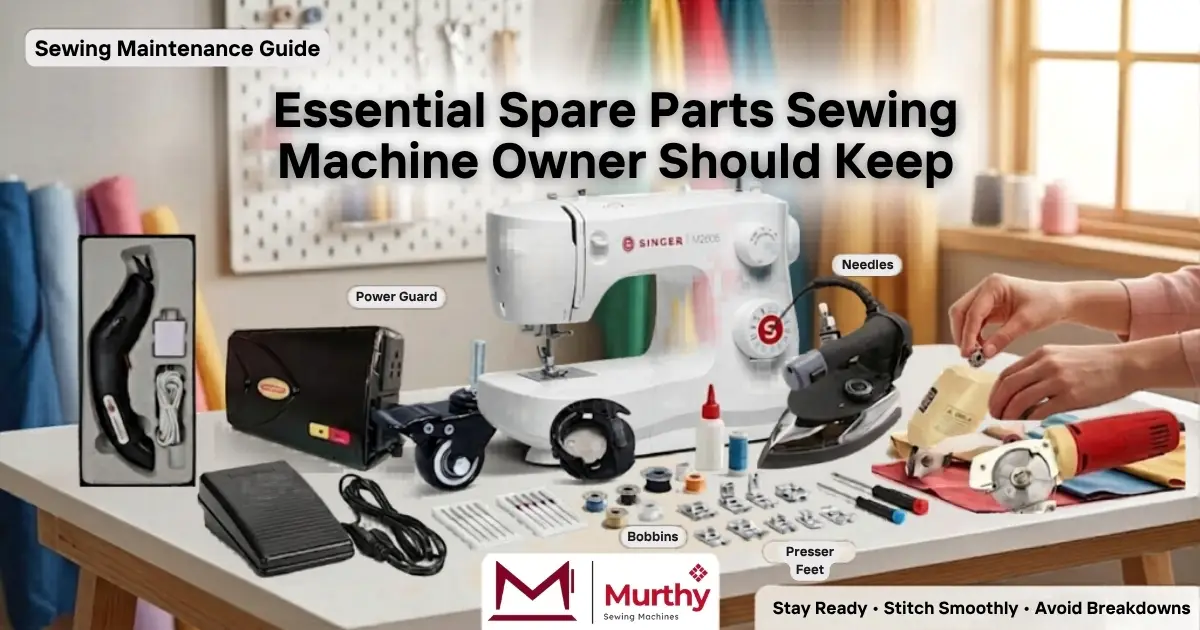
A sewing machine, whether domestic or industrial, is a mechanical system that depends on multiple small components working together. Even a minor part failure can stop your entire workflow.
Most sewing machine issues are not major breakdowns — they are usually caused by small, replaceable parts like needles, bobbins, or belts. Having the right spare parts ready can save time, prevent delays, and keep your work uninterrupted.
This guide explains the essential spare parts every sewing machine owner should keep, especially if you regularly use your machine for tailoring or production.
Why Keeping Spare Parts Matters
Many users wait until a problem occurs before looking for a solution. This often leads to downtime, delayed work, and unnecessary stress.
Keeping spare parts helps you:
- Avoid sudden work interruptions
- Fix minor issues instantly
- Reduce dependency on service technicians
- Extend machine life
- Maintain consistent stitching quality
Whether you use a domestic sewing machine or an industrial sewing machine, basic spare parts are always necessary.
1. Sewing Machine Needles
Needles are the most frequently replaced part in any sewing machine.
Why You Need Spares:
- Needles wear out quickly
- Different fabrics require different needle types
- Bent or dull needles cause stitch issues
Types to Keep:
- Regular needles (for cotton fabrics)
- Ballpoint needles (for stretch fabrics)
- Heavy-duty needles (for denim, leather)
Always change the needle if you notice skipped stitches or uneven stitching.
2. Bobbins and Bobbin Cases
Bobbins hold the lower thread and are essential for stitching.
Why You Need Them:
- Bobbins can get damaged or lost
- Multiple bobbins help with thread color changes
- Bobbin case issues affect stitch tension
Tips:
- Keep at least 5–10 bobbins
- Use machine-compatible bobbins only
- Clean lint buildup regularly
3. Presser Feet (For Different Stitching Needs)
Presser feet control fabric movement and vary based on usage.
Common Types:
- Standard presser foot
- Zipper foot
- Buttonhole foot
- Overlock foot
Why It Matters:
Different presser feet improve stitching quality for specific tasks. Without the right foot, your work may look unfinished or uneven.
4. Drive Belt (Important for Machine Movement)
The drive belt connects the motor to the machine mechanism.
Why Keep a Spare:
- Belts can wear out or loosen over time
- A broken belt stops the machine completely
Signs of Belt Issues:
- Reduced speed
- Slipping sound
- Machine not running smoothly
This is especially important for industrial sewing machines.
5. Sewing Machine Oil
Lubrication is essential for smooth operation.
Why You Need It:
- Reduces friction between moving parts
- Prevents overheating
- Extends machine lifespan
Usage Tip:
- Always use recommended sewing machine oil
- Avoid over-oiling
Regular oiling improves performance and reduces wear.
6. Thread Spool Pins and Holders
These small components are often overlooked.
Why Keep Spares:
- Pins can bend or break
- Improper thread feeding causes tension issues
A damaged spool pin can lead to inconsistent stitching.
7. Feed Dogs (Fabric Movement Component)
Feed dogs help move the fabric forward during stitching.
Why They Matter:
- Worn-out feed dogs cause fabric slipping
- Uneven feeding affects stitch quality
Replacing feed dogs can restore proper fabric movement.
8. Needle Plate
The needle plate supports the fabric during stitching.
Why Keep a Spare:
- It can get scratched or damaged
- Damage affects stitch accuracy
If you work with heavy fabrics or high-speed machines, this becomes more important.
9. Motor Carbon Brushes (For Motor-Based Machines)
Applicable for machines with motors.
Why You Need Them:
- Brushes wear out with usage
- A worn brush reduces motor efficiency
Replacing carbon brushes ensures smooth motor performance.
10. Extra Threads (Basic but Essential)
Thread is not exactly a spare part, but it is critical.
Keep:
- Multiple colors
- Strong quality threads
- Fabric-specific threads
Low-quality thread can cause breakage and stitching problems.
11. Tension Assembly Components
Thread tension plays a major role in stitch quality.
Why Spare Parts Matter:
- Springs and discs can wear out
- Improper tension leads to loose or tight stitches
If your machine shows inconsistent stitching, this is often the cause.
12. Foot Pedal (For Electric Machines)
The foot pedal controls speed.
Why Keep a Backup:
- Pedals can fail due to wiring issues
- A faulty pedal affects speed control
This is important for both domestic sewing machines and industrial setups.
How to Store Sewing Machine Spare Parts
Keeping spare parts is useful only if they are properly stored.
Storage Tips:
- Use labeled boxes
- Keep parts in dry conditions
- Avoid mixing small components
- Store frequently used parts separately
Proper storage helps you quickly access parts when needed.
When Should You Replace Spare Parts?
Not every part needs frequent replacement. But you should monitor signs like:
- Unusual noise
- Uneven stitching
- Fabric not feeding properly
- Thread breakage
- Reduced machine speed
Replacing worn parts at the right time prevents bigger issues.
Common Mistakes to Avoid
- Using low-quality spare parts
- Ignoring small machine issues
- Not maintaining stock of basic parts
- Using incompatible components
Always ensure that spare parts match your machine model.
Final Thoughts
A sewing machine is only as reliable as its smallest components. Keeping essential spare parts ensures that your work never stops due to minor issues.
Whether you are a home user or running a tailoring setup, having these spare parts ready gives you control over your workflow.
If you are based in Chennai and looking for genuine sewing machine spare parts along with expert guidance, Murthy Sewing Machines can help you choose the right components for your machine.
FAQs
What are the most important spare parts for a sewing machine?
Needles, bobbins, presser feet, and oil are the most essential spare parts that every sewing machine user should have.
How often should I replace sewing machine needles?
Needles should be replaced after every 8–10 hours of use or when you notice skipped stitches or fabric damage.
Can I use any spare parts for my sewing machine?
No, you should always use machine-compatible spare parts to avoid performance issues or damage.
Why is my sewing machine not stitching properly even after changing the needle?
The issue could be related to bobbin tension, feed dogs, or thread quality. Check these components as well.
Where can I buy genuine sewing machine spare parts in Chennai?
You can get original and compatible spare parts from trusted dealers like Murthy Sewing Machines, who also provide guidance based on your machine type.