


Difference Between Computerized and Electronic Sewing Machine

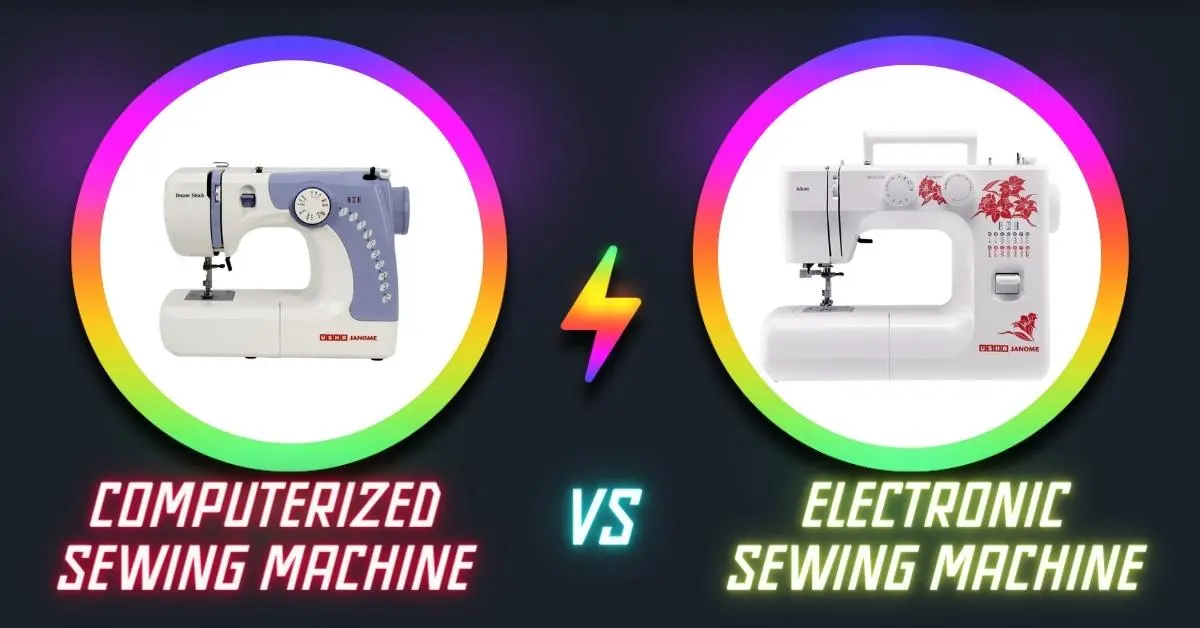
If you want advanced automation, built-in stitch patterns, memory functions, and greater customization, a computerized sewing machine is usually the better choice. If you prefer a simpler machine with electronic controls but without complex programming, an electronic sewing machine may be a practical option. The right choice depends on your experience level, sewing goals, and budget.
Understanding the Difference Between Computerized and Electronic Sewing Machines
Many buyers assume computerized and electronic sewing machines are the same. While both use electrical components to improve sewing performance, they offer different levels of automation and control.
Electronic sewing machines bridge the gap between traditional mechanical machines and modern computerized models. Computerized sewing machines take automation much further by incorporating software-controlled functions and advanced stitching capabilities.
Understanding these differences can help you invest in a machine that supports your current and future sewing needs.
What Is an Electronic Sewing Machine?
An electronic sewing machine uses electrical controls to manage certain sewing functions. Instead of manually adjusting everything, users can benefit from features such as speed control, automatic needle positioning, and push-button operation.
Common Features of Electronic Sewing Machines
- Electronic speed control
- Push-button start and stop
- Automatic needle up/down function
- Adjustable stitch length
- Built-in utility stitches
- Improved sewing consistency
These machines are popular among hobbyists, home users, and tailors looking for convenience without moving into advanced computerized systems.
What Is a Computerized Sewing Machine?
A computerized sewing machine uses an internal computer system to control sewing functions. These machines often include digital displays, programmable stitches, memory functions, and automatic adjustments.
Computerized models are designed for users who need precision, versatility, and creative flexibility.
Common Features of Computerized Sewing Machines
- LCD or touchscreen display
- Hundreds of built-in stitch patterns
- Automatic thread cutting
- One-step buttonhole creation
- Stitch memory functions
- Automatic tension control
- Embroidery compatibility on some models
- Pattern customization
These machines are commonly used by fashion designers, boutique owners, advanced hobbyists, and sewing professionals.
Computerized vs Electronic Sewing Machine: Side-by-Side Comparison
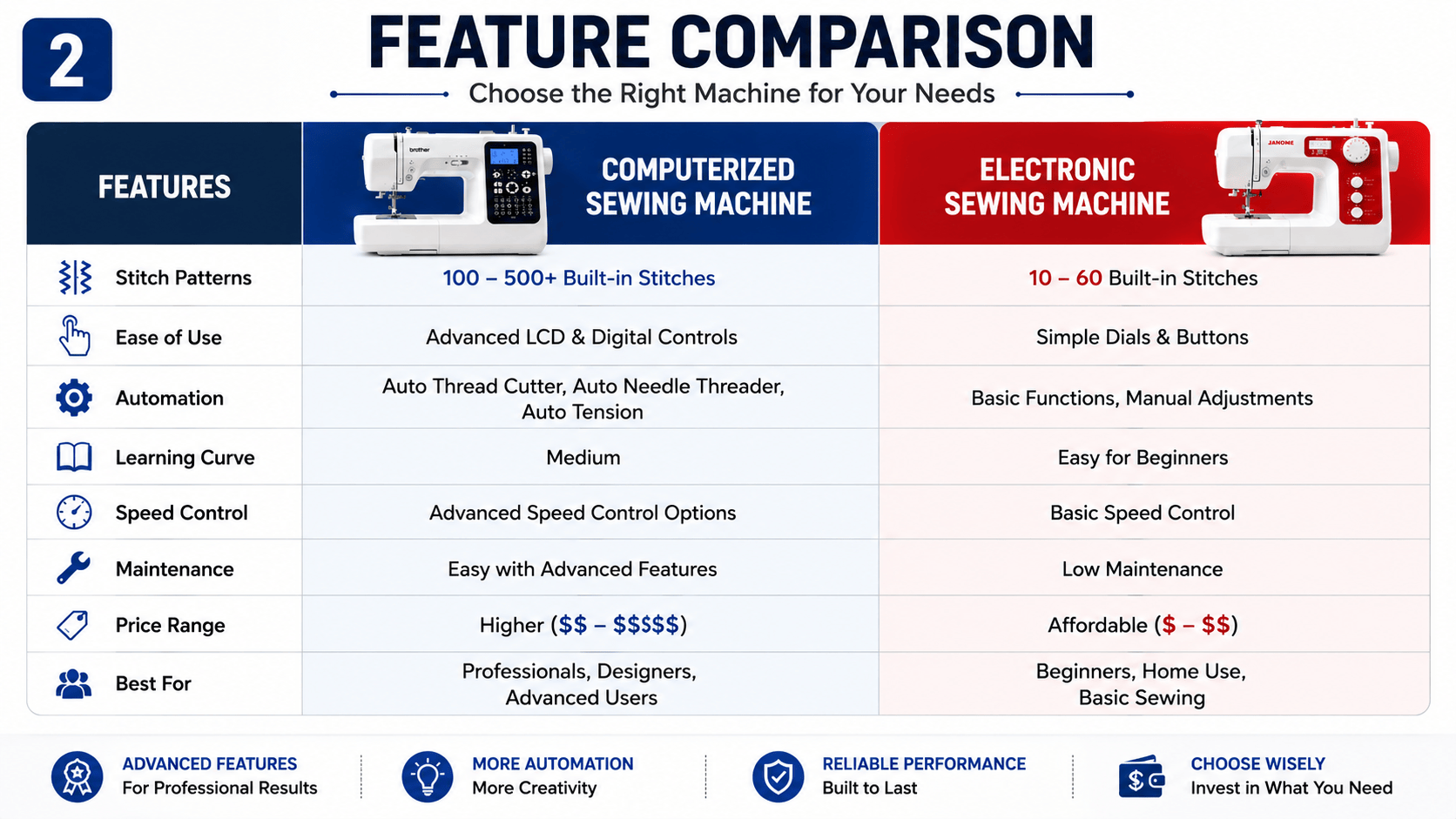
Feature | Electronic Sewing Machine | Computerized Sewing Machine |
Operation | Electronic Controls | Software Controlled |
Learning Curve | Easier | Moderate |
Stitch Options | Limited to Moderate | Extensive |
Custom Stitch Creation | No | Yes |
Display Screen | Basic or None | LCD/Touchscreen |
Memory Functions | No | Yes |
Automatic Features | Some | Many |
Precision | Good | Excellent |
Price Range | Lower | Higher |
Creative Possibilities | Moderate | Advanced |



Advantages of Electronic Sewing Machines
Easier to Learn
Electronic machines are generally less intimidating for beginners compared to computerized models.
More Affordable
They typically cost less while still offering useful automation features.
Lower Maintenance Complexity
Fewer computerized components often mean simpler troubleshooting and repairs.
Reliable for Everyday Sewing
Electronic machines perform well for alterations, home sewing projects, and routine tailoring work.
Advantages of Computerized Sewing Machines
Greater Stitch Variety
Many models include dozens or even hundreds of built-in stitch options.
Improved Precision
Computer-controlled adjustments provide consistent stitch quality.
Time-Saving Automation
Automatic thread cutting, tension adjustment, and stitch selection help improve productivity.
Better for Creative Projects
Users working on decorative stitching, quilting, fashion design, and embroidery often benefit from computerized machines.
Who Should Buy an Electronic Sewing Machine?
An electronic sewing machine may be suitable if you are:
- Learning sewing for the first time
- Doing occasional home stitching
- Handling clothing alterations
- Looking for a budget-friendly upgrade from a mechanical machine
- Seeking simple operation
Who Should Buy a Computerized Sewing Machine?
A computerized sewing machine may be suitable if you are:
- A fashion design student
- A boutique owner
- A sewing enthusiast
- A quilting enthusiast
- Creating decorative stitching projects
- Looking for advanced customization options
- Planning long-term sewing growth
Common Mistakes Buyers Make
Buying Too Advanced Too Early
Many beginners purchase computerized machines with features they never use.
Choosing Based Only on Price
The cheapest machine is not always the most cost-effective investment.
Ignoring Future Needs
Your sewing requirements may expand over time.
Overlooking Service Support
Availability of service and spare parts should always be considered before purchasing.
Which Machine Is Better for Different Users?
User Type | Recommended Machine |
Beginner | Electronic |
Home User | Electronic |
Hobby Sewer | Electronic or Computerized |
Fashion Design Student | Computerized |
Boutique Owner | Computerized |
Quilter | Computerized |
Creative Designer | Computerized |
Expert Recommendation
If your primary goal is everyday sewing, alterations, and learning, an electronic sewing machine offers excellent value and simplicity.
If you want advanced functionality, decorative stitching, automation, and room for growth, a computerized sewing machine is usually the better long-term investment.
The best machine is not necessarily the one with the most features—it is the one that aligns with your sewing goals.
Why Buy Sewing Machines from Murthy Sewing Machines?
Murthy Sewing Machines helps customers choose the right sewing machine based on their actual requirements rather than simply recommending the most expensive option.
Whether you are a beginner, tailor, boutique owner, or entrepreneur planning to start a sewing business, selecting the right machine can improve productivity, stitch quality, and overall sewing experience.
FAQs
What is the main difference between a computerized and electronic sewing machine?
A computerized sewing machine uses software-controlled functions and advanced automation, while an electronic sewing machine provides electrical assistance without extensive programming features.
Is a computerized sewing machine better than an electronic sewing machine?
Not necessarily. The better machine depends on your sewing needs, experience level, and budget.
Are computerized sewing machines difficult to learn?
Most modern computerized machines are user-friendly, but they may require more time to understand compared to electronic models.
Which machine is better for beginners?
Electronic sewing machines are often preferred by beginners because they are simpler to operate and maintain.
Do computerized sewing machines require more maintenance?
They may require specialized servicing due to their electronic and software-based components.
Can computerized sewing machines be used for embroidery?
Some computerized models support embroidery functions, while others focus only on sewing operations.
Are electronic sewing machines suitable for tailoring work?
Yes. Many electronic sewing machines are suitable for home tailoring, alterations, and small sewing projects.
Which machine offers more stitch options?
Computerized sewing machines generally offer significantly more stitch patterns and customization features.
Is a computerized sewing machine worth the extra cost?
For users who need advanced features, automation, and creative flexibility, the additional investment can be worthwhile.
How do I choose the right sewing machine for my needs?
Consider your experience level, project types, future requirements, budget, and the availability of service support before making a purchase.